
 TITIKAKA LAKE & MOKO-MOKO CIRCUIT
Sacred islands • Stone corridors • Legends carved in rock • Hot springs beneath the Andean sky
There are treks that show you the Andes. And then there are treks that whisper them to you—through ancient stone paths, through islands where the sun was born, through corridors of rock so strange and powerful they feel like sleeping giants.
This six-day journey begins on the shores of Lake Titicaca, one of the highest navigable lakes in the world. For three days, you walk between small bays, lakeside villages, and sacred islands where pre-Columbian cultures flourished—and where the Inca world left some of its most important ceremonial sites. Then, you cross to the mainland and descend into the legendary homeland of the Moko-Moko, a people known for their small stature and their outsize influence on Andean history.
The walking is gentle. The altitudes are manageable. And the landscapes shift from deep blue water to surreal stone corridors to subtropical green—all before you sink into a natural hot spring pool under the open sky.
This is not a trek of extremes. It is a trek of discovery.
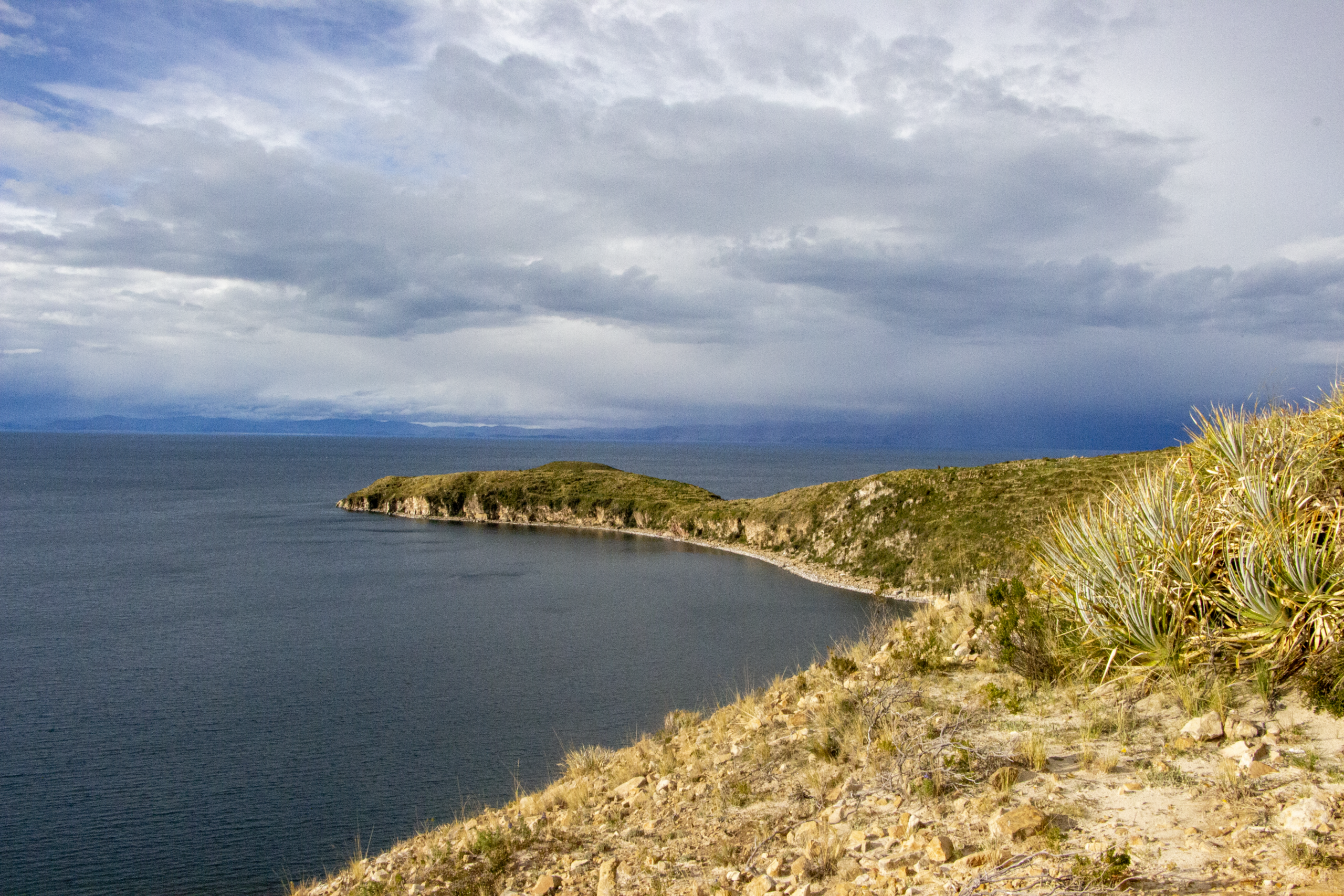
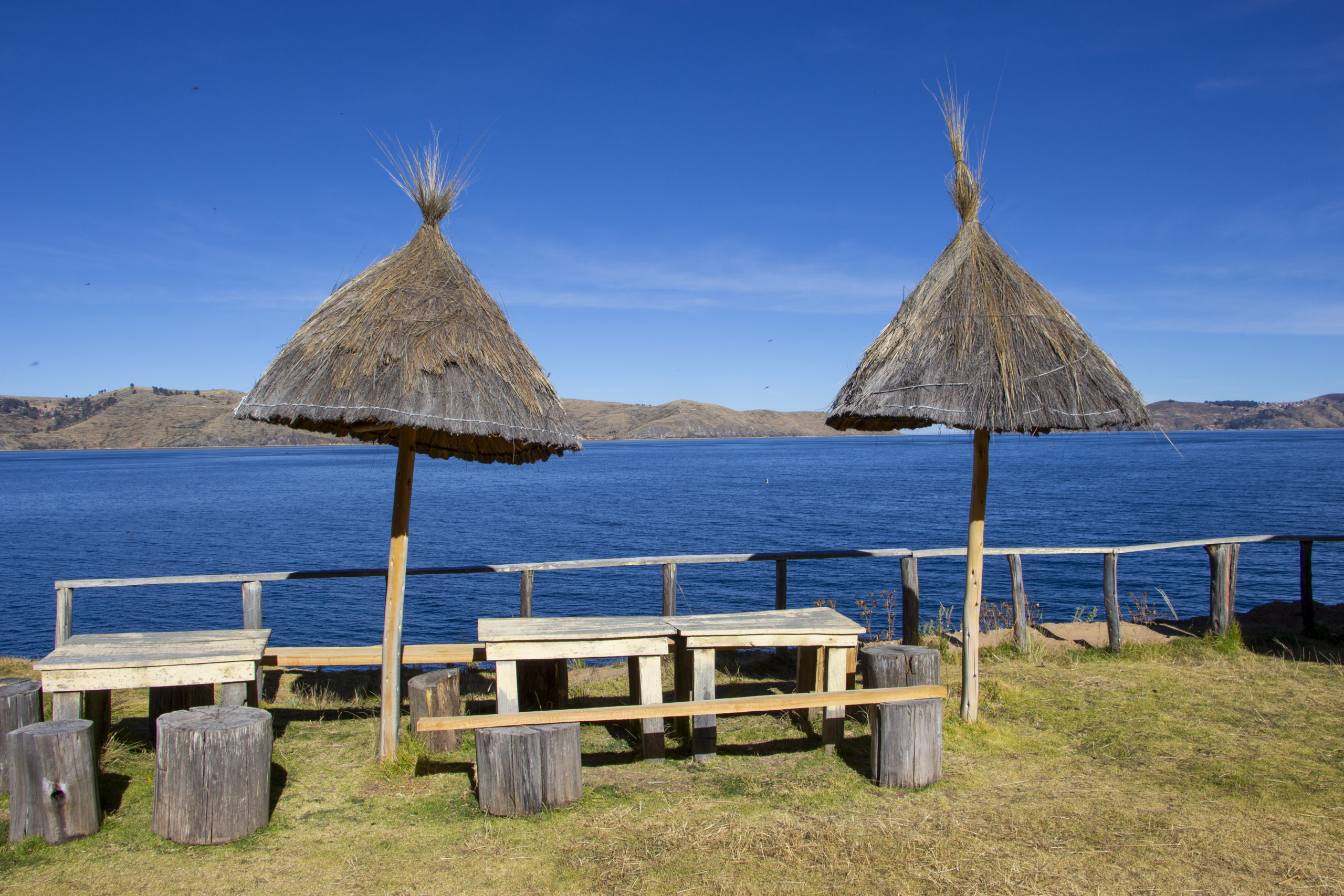
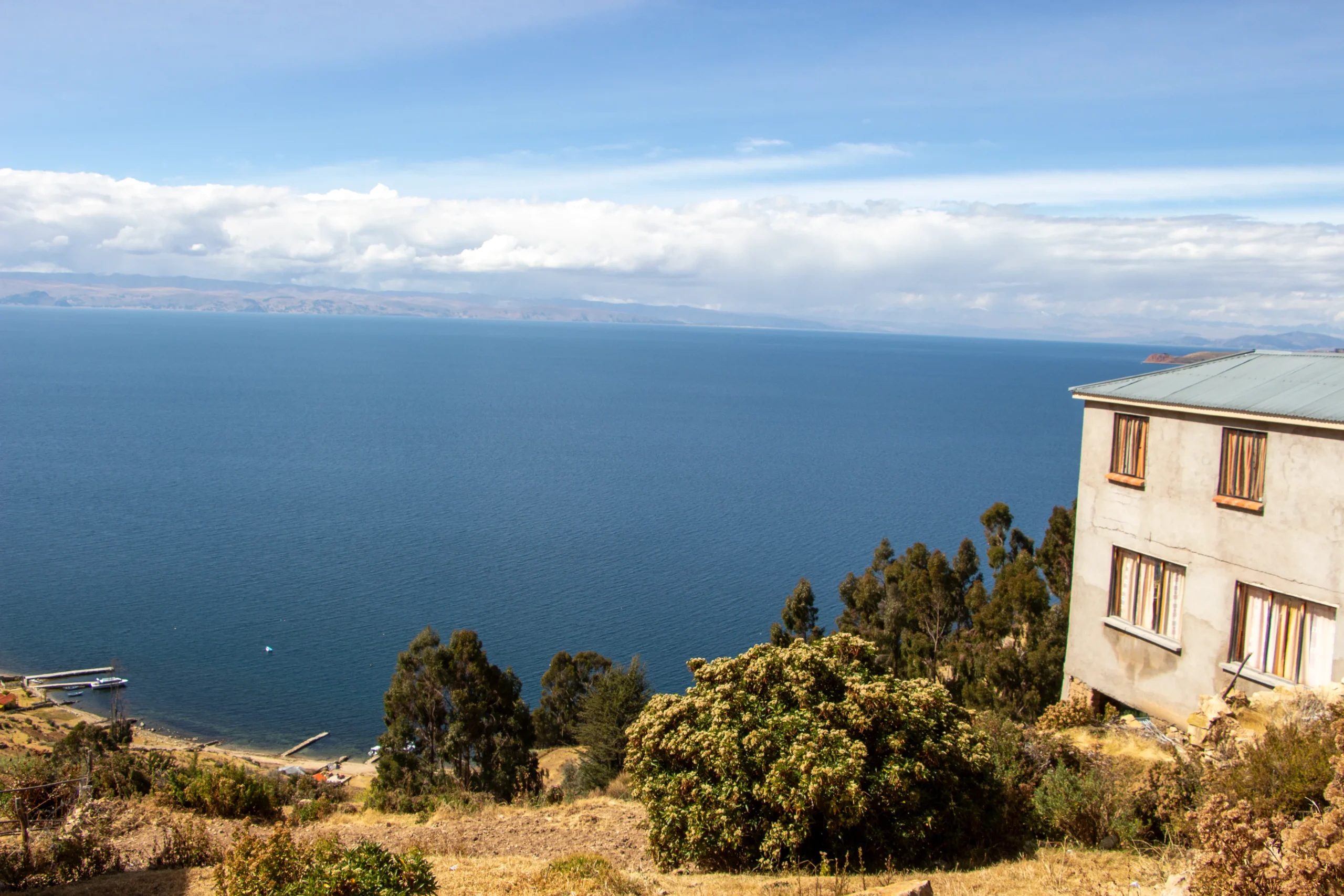
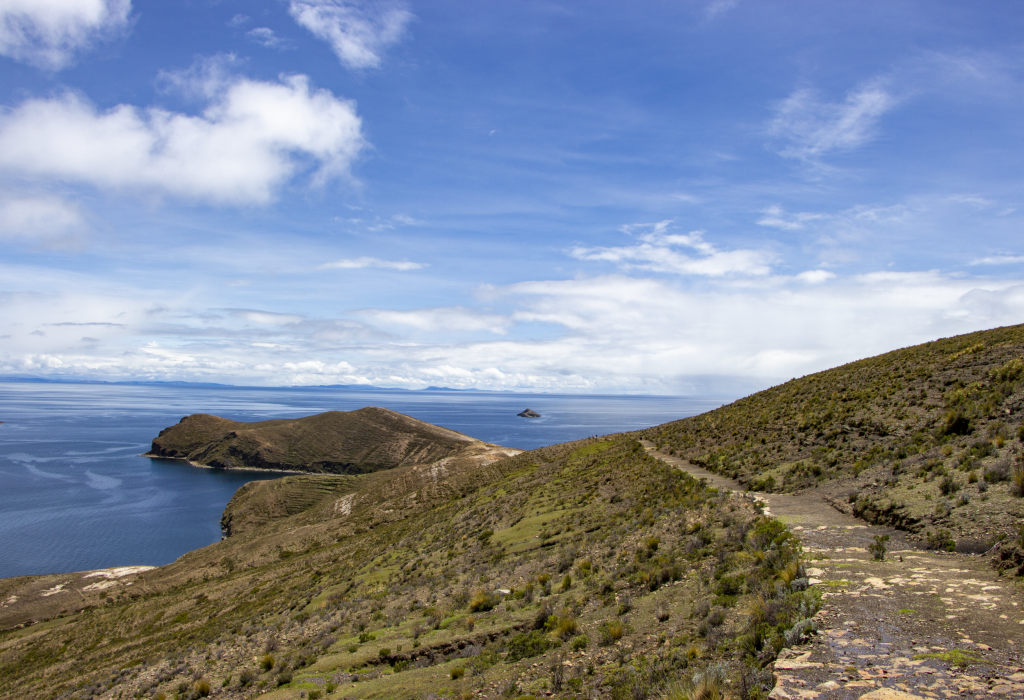
Your journey begins on the shores of Lake Titicaca, a vast mirror of deep blue water framed by snow-touched peaks and ancient agricultural terraces. The air is crisp, bright, and impossibly clear. Small waves lap against stone shores. In the distance, the white crowns of the Cordillera Real float above the horizon.
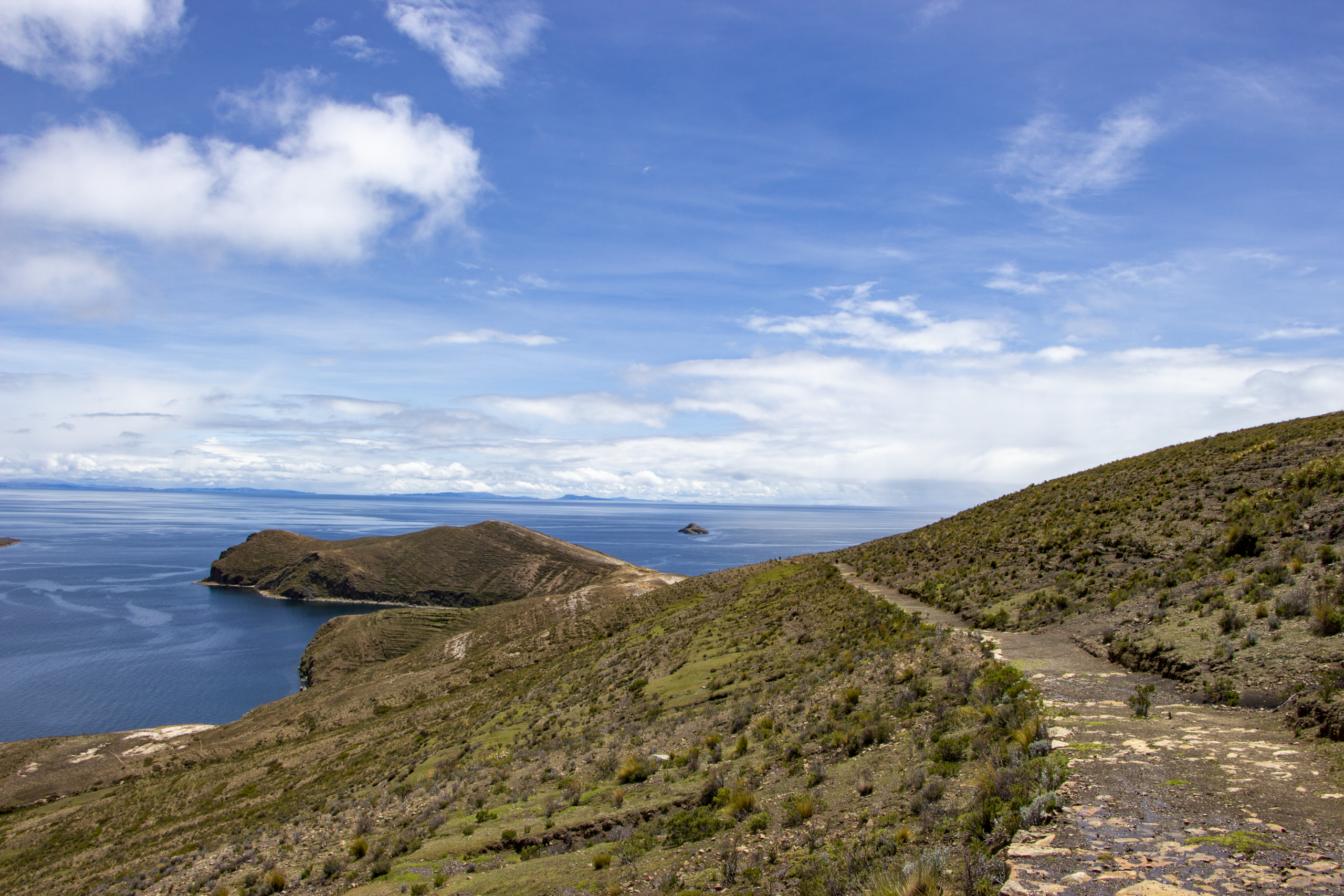
You walk along well-preserved pre-Columbian stone paths that climb gently from the water’s edge—around 3,800 meters—up to ridge-top viewpoints near 4,000 meters. The effort is gentle, the rewards immediate: panoramic views of the lake, its islands, and the patchwork of fields that have sustained communities here for thousands of years.
Along the way, you visit lakeside villages where life moves at the rhythm of the sun and the seasons. Women in layered skirts and bowler hats tend to small herds. Fishermen pull their boats onto gravel beaches. Children wave from doorways.
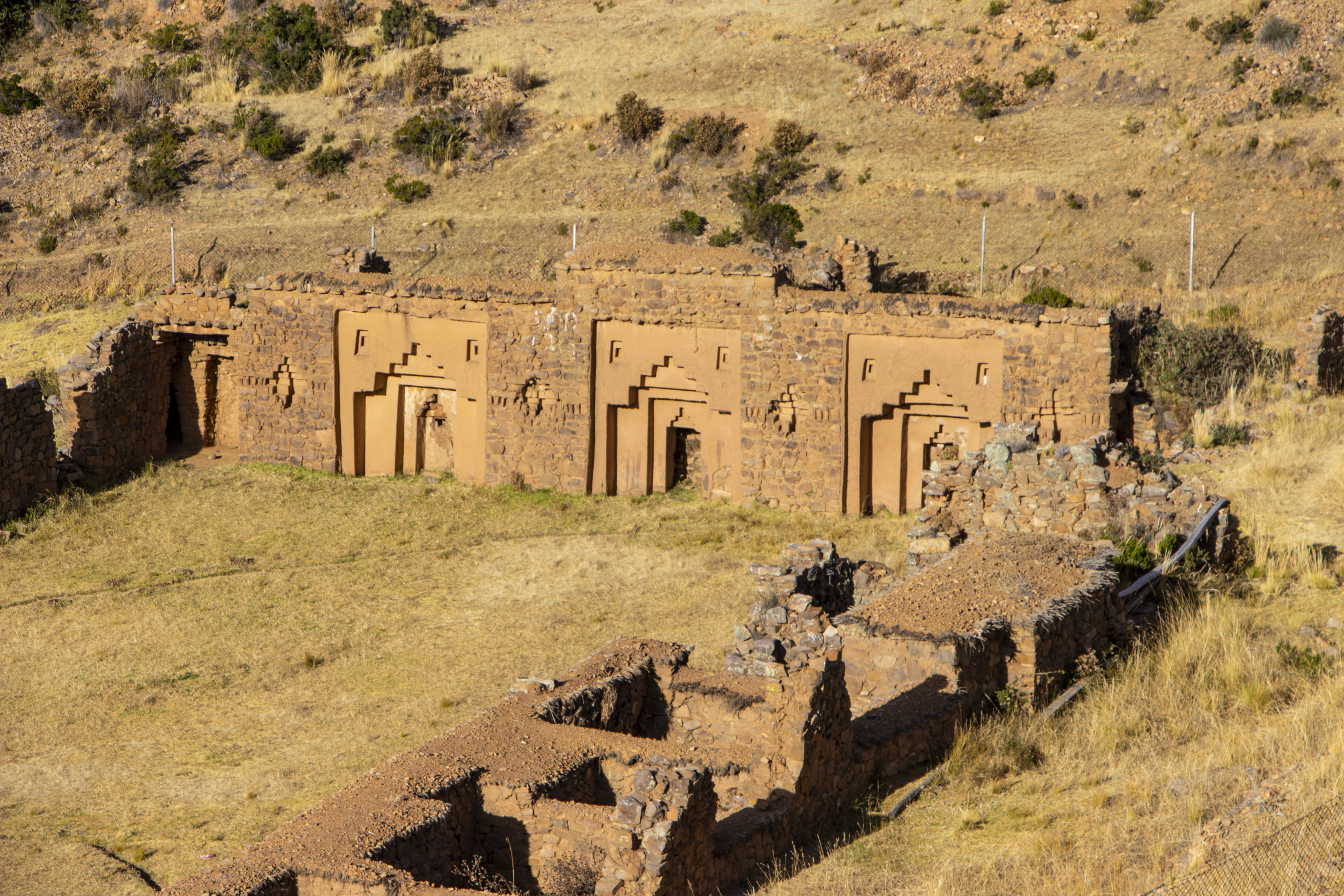
By afternoon, you reach archaeological complexes that once hosted priests, noble families, and the chosen women who served the sun and the moon. You walk among ceremonial courtyards and old stone structures, your guide bringing the stones to life with stories of rituals, offerings, and the sacred calendar.
As the sun begins to set, the lake turns to gold. You overnight in a simple village guesthouse, lulled by the sound of water and the immense silence of the altiplano.
A boat carries you across the deep blue strait to the Island of the Sun (Isla del Sol), the most sacred site in Inca mythology. According to legend, this is where the sun god Inti rose from the waters to create the first Inca.
You walk the island’s spine on ancient trails, passing:
Chinkana (“The Labyrinth”) – a complex of Inca passages and ceremonial chambers carved into the rock.
The Sacred Rock – a massive sandstone formation where offerings are still left to this day.
Terraced hillsides that cascade down to the water’s edge, still cultivated as they were centuries ago.
Then, by boat again, you cross to the quieter Island of the Moon (Isla de la Luna). Here stand the ruins of Iñak Uyo—the “Palace of the Virgins of the Sun,” where chosen women wove fine garments and brewed ceremonial chicha for the Inca elite.
The wind on the moon island is stronger, the silence deeper. You feel, in this place, the weight of a world that came before.
You overnight on the islands, wrapped in stars and the soft lapping of waves against stone.
Morning light floods the lake as you board a final boat back to the mainland. Behind you, the islands fade into blue. Ahead, a new chapter waits.
From a lakeside community, a two hour drive leads you into the hills—toward a tiny mountain village that serves as the gateway to the legendary homeland of the Moko-Moko.
The Moko-Moko, your guide explains, were a people known for their small stature and their outsize influence. Stories of them still drift through local families. Some say they were real. Some say they were spirits. The trail we walk today belongs to their memory.
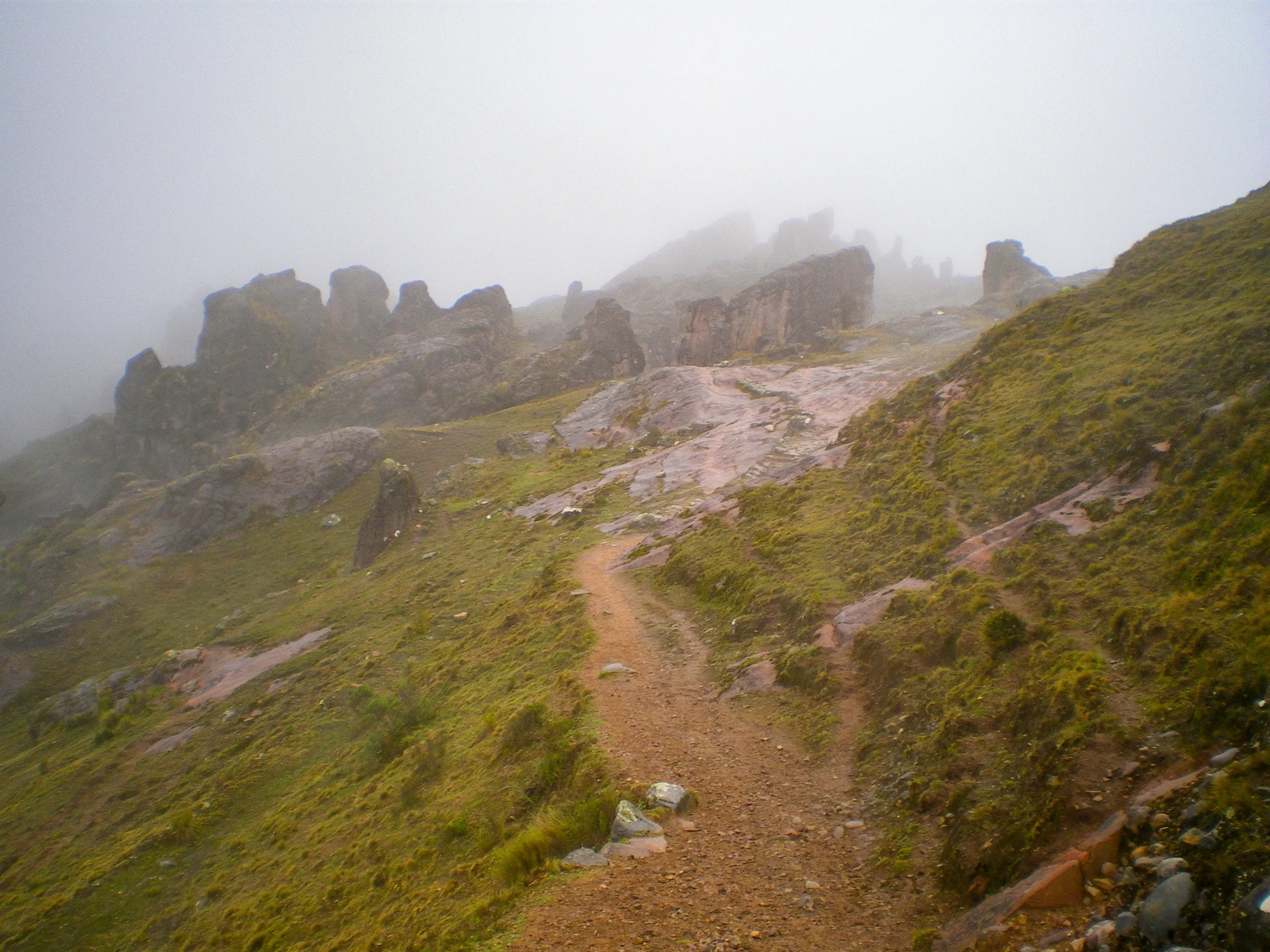
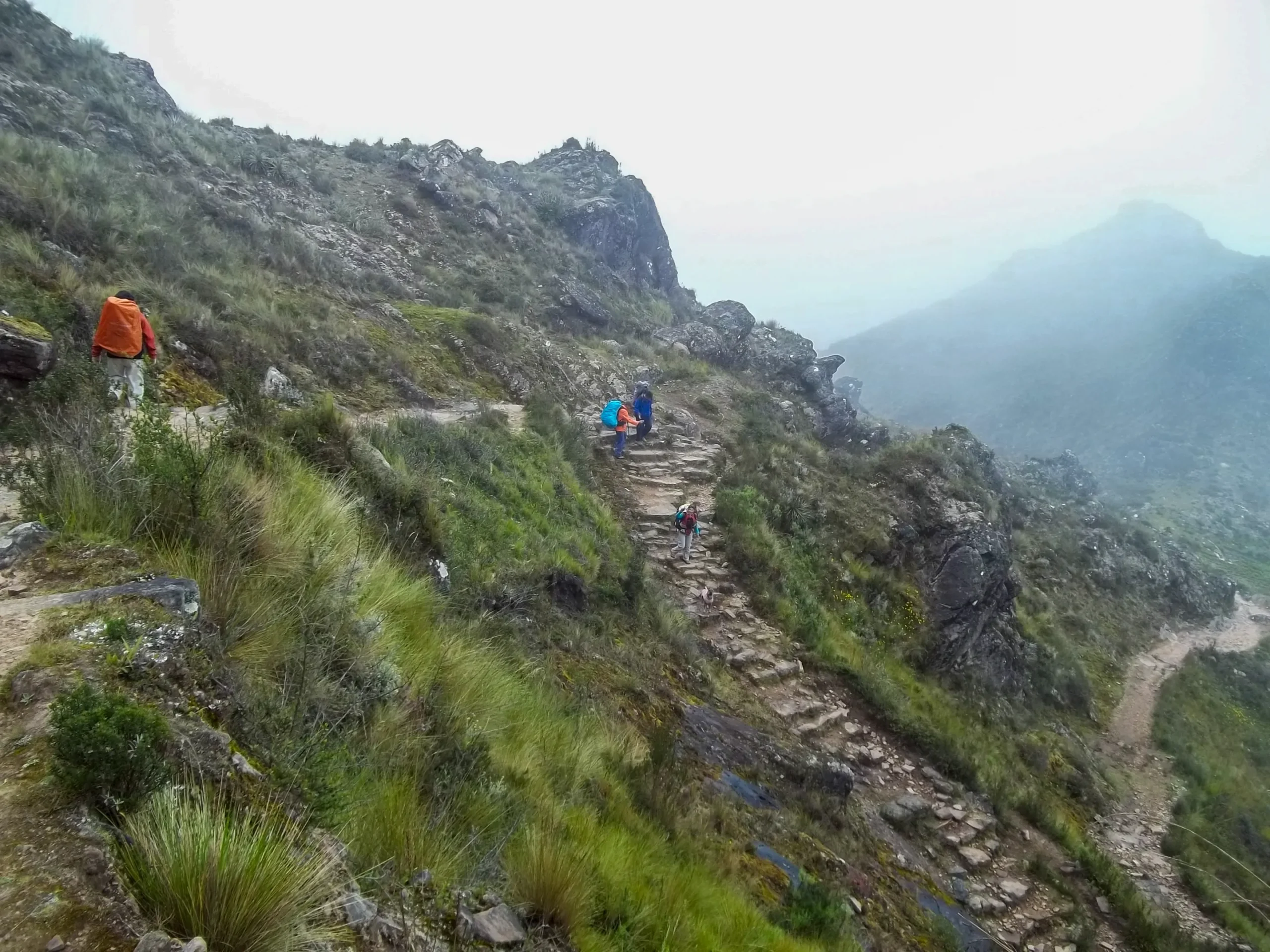
You begin the descent along a beautiful pre-Columbian trail that leads you into something extraordinary.
A stone corridor.
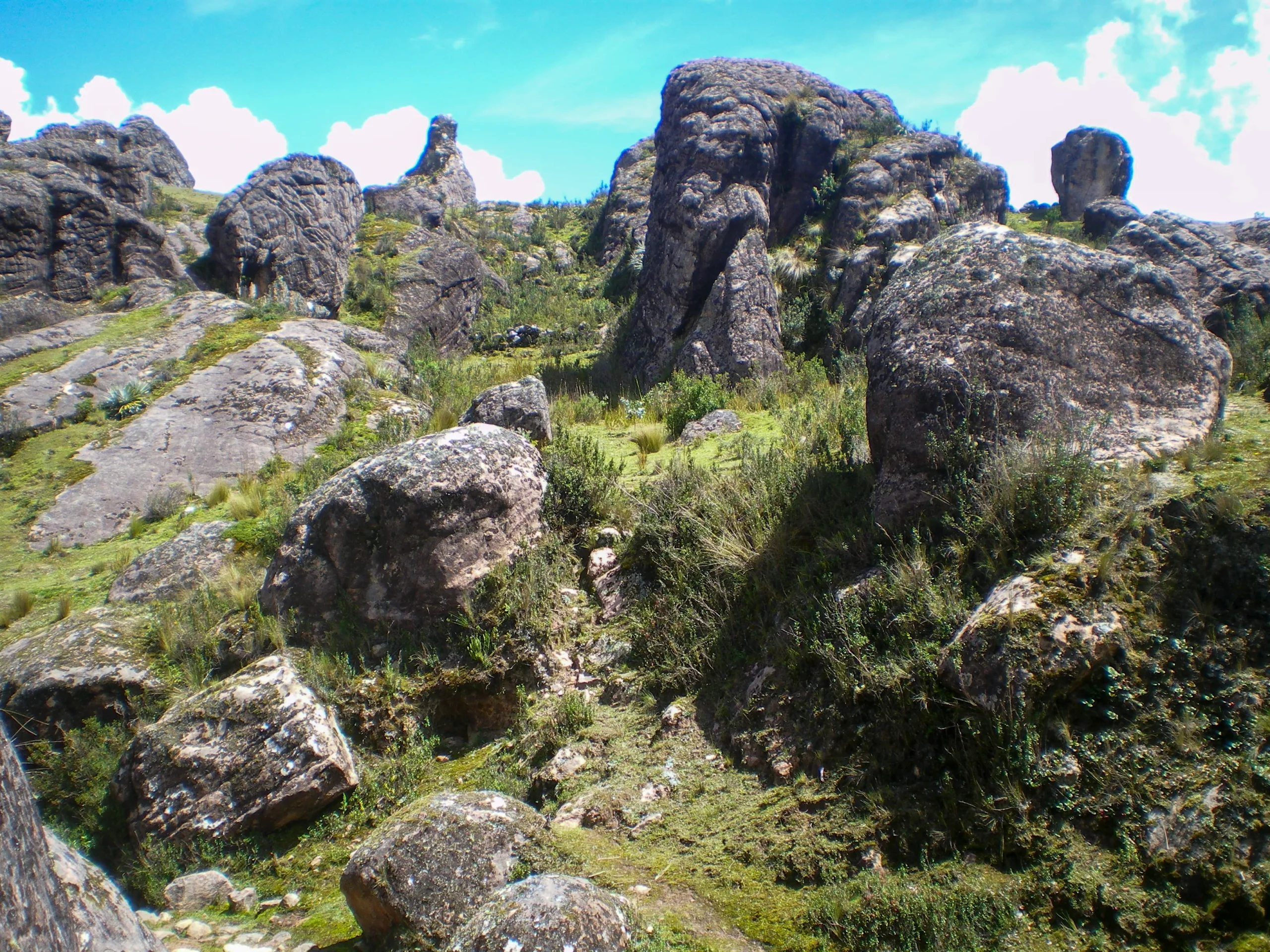
The path winds between massive rock formations, carved over millennia by wind, rain, and time. These sculpted giants rise abruptly from the slopes—pillars, towers, and rounded silhouettes that feel almost alive. They seem to lean toward the trail, as if watching. Strange shapes cast long shadows in the afternoon light.
This section of the trek feels less like a hike and more like stepping into a myth. Geology and legend blend into a single, unforgettable landscape. You walk slowly, looking up, turning in circles. The silence is deep, broken only by the crunch of boots on ancient stone.
By late afternoon, you emerge from the corridor into gentler terrain. You overnight in a small community at the edge of the highlands.
You wake to the sound of birds you do not recognize. The air is warmer today.
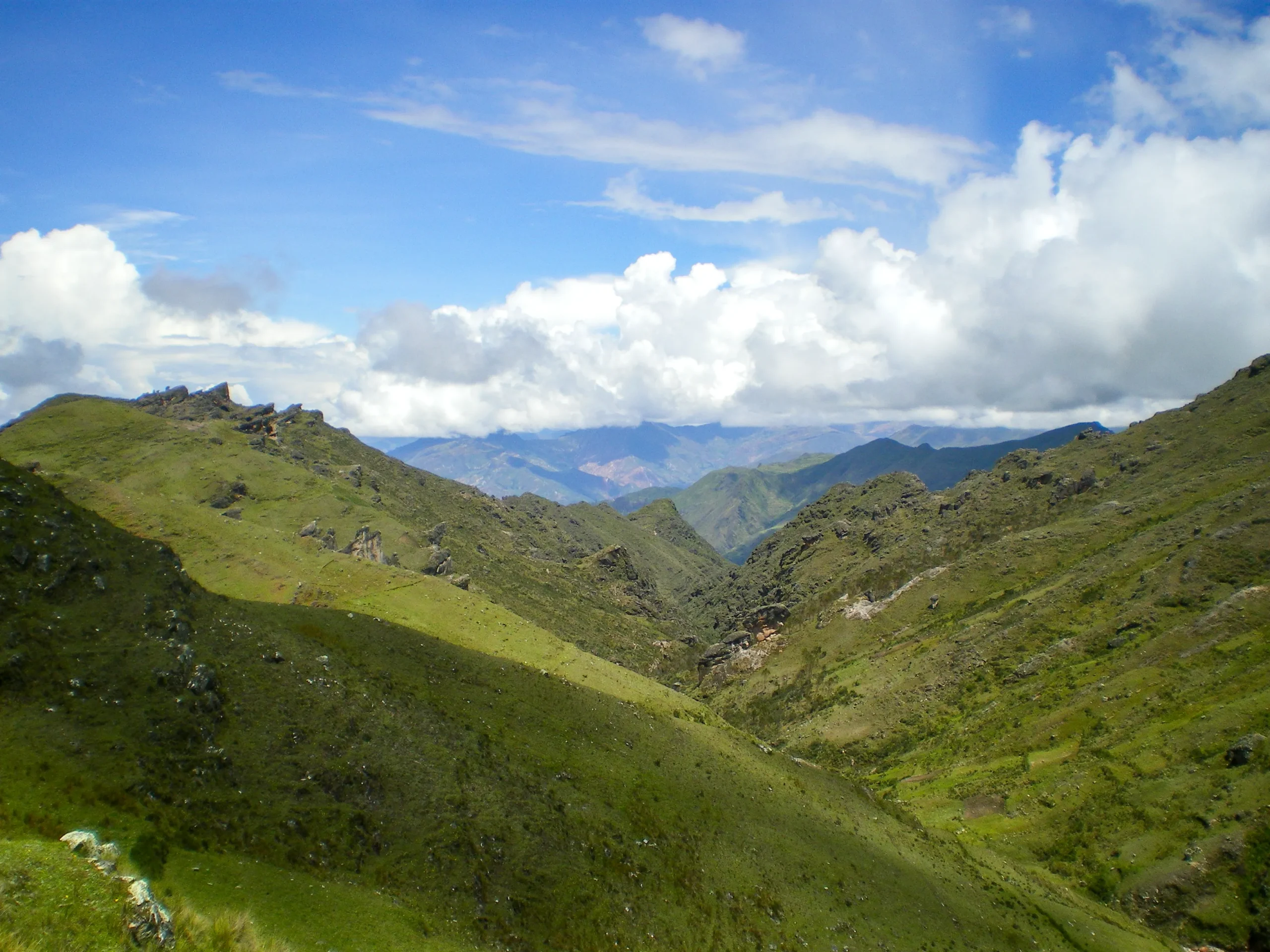
You continue down the ancient pre-Columbian stone road, watching the terrain soften. Open highlands give way to scattered trees, then thicker vegetation. The path is still well-preserved—a testament to the engineers who built these routes long before the Spanish arrived.
As you descend toward 2,800 meters, the climate shifts. Temperatures rise. The air feels richer, heavier, fragrant with earth and growing things. The landscape opens into subtropical slopes—greener, lusher, dotted with flowering plants and the first hints of cloud forest.
You pass small farms that grow corn alongside traditional potatoes. The transition is gradual but unmistakable: you have left the high Andes behind, for now, and entered the warm embrace of the Yungas.
You overnight at “Huarka Marka” (Floating City) campsite. The evening is soft and golden.
The last day of trekking is short and sweet—a gentle walk through the final stretch of subtropical terrain. The path follows a river for a time, crossing small wooden bridges, passing beneath trees draped in vines.
And then, your reward.
A swimming pool fed by natural hot springs awaits you—a quiet, serene place set against a backdrop of green hills. The water is warm, mineral-rich, and impossibly soothing on legs that have walked ancient trails for nearly a week.
You sink in. Let the heat soak into your muscles. Watch the clouds drift over the valley. The trek is over, but the feeling—of having walked through history, legend, and living landscape—stays.
You stay overnight near the hot springs. There is time for a final dinner together, for swapping favorite moments, for quietly sitting with the journey you have just completed.
After breakfast, our vehicle meets you for the drive back to La Paz. The road climbs out of the warm valleys, passes through the high plains, and by late afternoon brings you home—tired, content, and full of images that will not fade:
The deep blue mirror of Lake Titicaca
The sacred silence of the Island of the Moon
The stone corridor of the Moko-Moko, where giants seem to watch
The slow descent from highlands to subtropical green
The hot springs that welcomed you at the end of the trail
Six days. Two worlds. One unforgettable journey.
 Why Trek the Titikaka Lake & Moko-Moko Circuit with AHE?
This is not a circuit for conquering the highest passes. It is a circuit for listening—to the wind on the lake, to the stories carved in stone, to the legends of a people who still walk the edges of local memory.
When you book with Andes Heritage Expeditions, you are not just hiring a guide. You are stepping into a journey designed from your arrival to your farewell, with every detail attended to.
| Why AHE? | What You Get |
|---|---|
 Both sacred islands Both sacred islands | Sun and Moon – many operators visit only Isla del Sol |
 The Moko-Moko stone corridor The Moko-Moko stone corridor | A hidden, surreal landscape most travelers never see |
 Expert local guides Expert local guides | Storytellers, not just route-finders – they carry the legends |
 Seamless logistics Seamless logistics | Boat crossings, village stays, hot springs – all coordinated |
 Two ecological worlds Two ecological worlds | High Andean lake + subtropical Yungas in one journey |
 Hot springs finale Hot springs finale | A natural thermal pool to rest and reflect |
 Community-based lodging Community-based lodging | Your stay directly benefits lakeside and highland families |
 Customizable Customizable | Add days, adjust difficulty, or combine with other AHE circuits |
We design tailor-made trekking experiences for every level of trekker – from high mountain plateaus to tropical valleys and cultural immersion. We take care of every detail, from arrival to departure.
Walk with us. The Andes have stories to tell.
 Quick Facts
| Detail | Information |
|---|---|
| Duration | 6 days / 5 nights |
| Starting point | La Paz City (morning pickup) |
| Difficulty | Low–Medium (gentle walking, no extreme passes) |
| Maximum altitude | ~4,000 m (13,100 ft) |
| Minimum altitude | ~2,800 m (9,200 ft) |
| Best season | April–October (dry season); islands are pleasant year-round |
| Accommodation | Village guesthouses, tents, community lodges, hot springs lodge |
| Who it’s for | Travelers seeking culture, legend, and scenic beauty without extreme physical demands |
 A Gentle Note on This Trek
Unlike our high-mountain circuits (Nevado Mine Pass at 5,200 m, San Francisco at 5,100 m, and others), this journey is accessible to most travelers in good health. The altitude peaks at a manageable 4,000 meters, and the walking is moderate. That said:
Acclimatize in La Paz for at least 1–2 days before starting (check our day-hike options).
Pack layers – mornings on the lake are cold; afternoons in the Yungas are warm.
Bring swimwear for the hot springs.
Come with curiosity – the Moko-Moko legends are best met with an open mind.
 Combine This Circuit with Other AHE Adventures
This 6-day journey pairs beautifully with:
Kallawaya Circuit – add 3 days of healer culture and hot springs
Awqani / Conchamarca / Murmuntani Canyon – add 2 days of stone forests and baroque churches
Uyuni Salt Flats – travel from La Paz for a completely different landscape
Let us know if you would like to build a custom multi-adventure package.