

 HIGH-ALTITUDE LAGOONS – SAJAMA NATIONAL PARK
Volcanic landscapes • Mirror-like lagoons • Flamingos, vicuñas, and Queñua forests • The Southern Milky Way • Hot springs beneath snow-capped giants
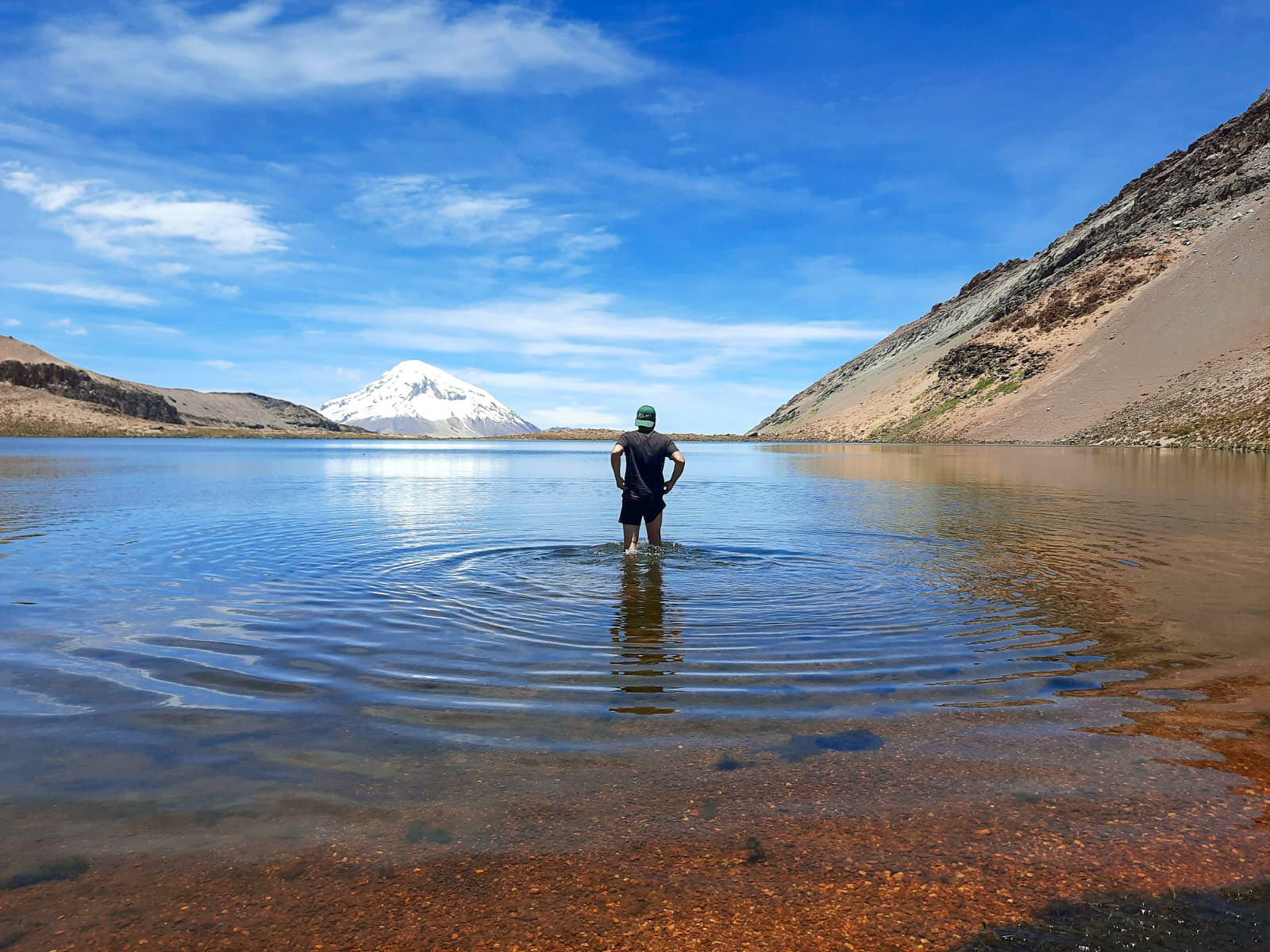
Imagine a realm that feels suspended between worlds. A place where the air is thin, the horizon feels endless, and the ground beneath your boots is soft with fine volcanic sand. Where lagoons shift from deep blue to metallic silver as the light changes, and pink flamingos wade at the water’s edge. Where ancient, wind-sculpted Queñua trees—members of the rose family—form a final, enchanted forest before the land opens into pure stone.
This is Sajama National Park, in the Western Andes of Bolivia. And this two-day trek is your invitation to enter it.
You will begin walking above 4,600 meters (15,000 feet), climbing gently toward more than 5,100 meters (16,700 feet). The trail is kind, the challenge is the altitude, and the reward is profound: a night under the Southern Milky Way, followed by a final soak in natural hot springs surrounded by snow-capped volcanic giants.
This is more than a hike. It is a journey into the elemental soul of the Western Andes.
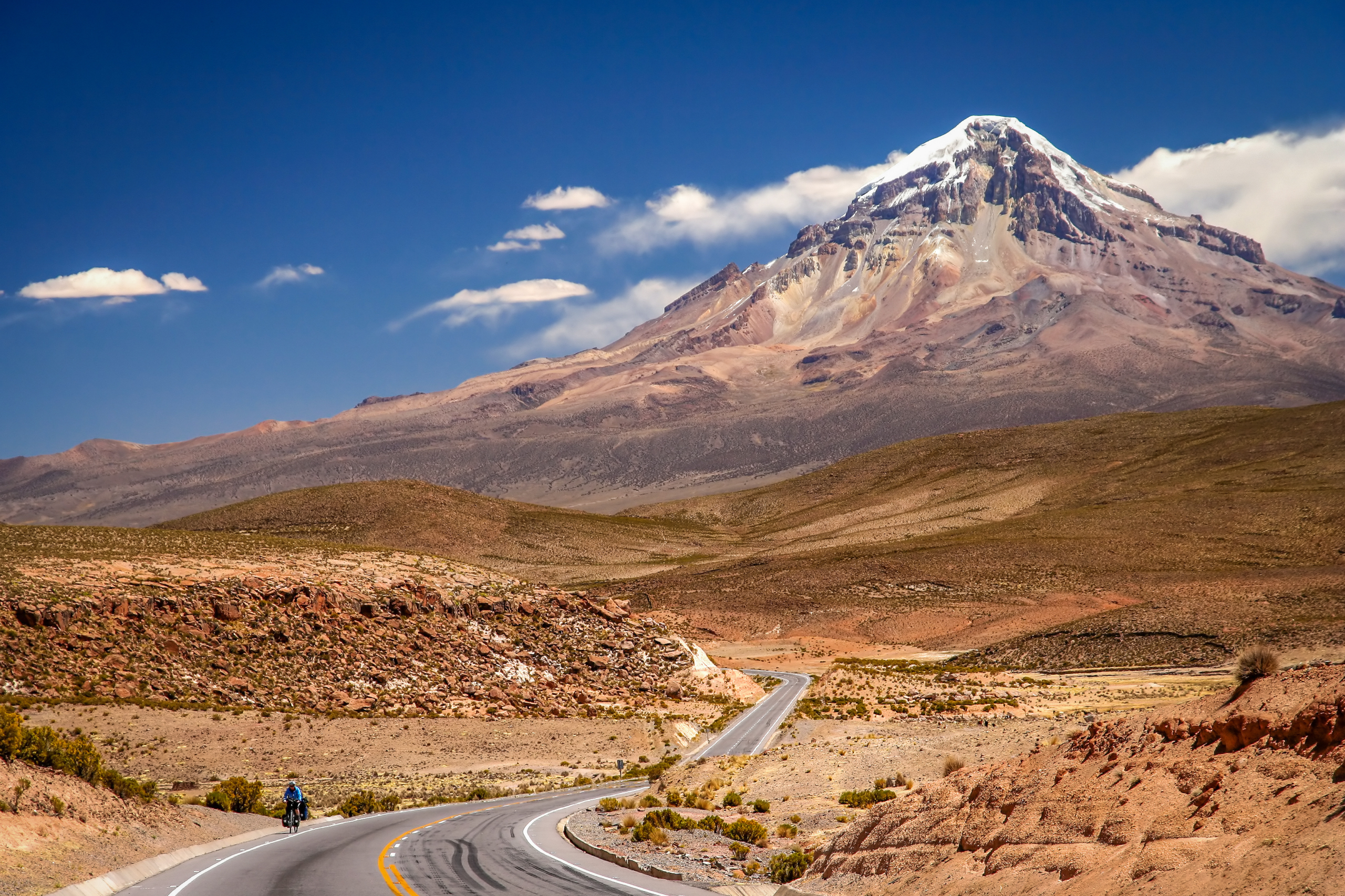
The journey begins early, with a drive southwest from La Paz toward the Chilean border. The altiplano opens around you—vast, windswept, golden under the Andean sun. In the distance, the first snow-capped volcanoes appear on the horizon: Sajama, Bolivia’s highest peak, flanked by its ancient companions.
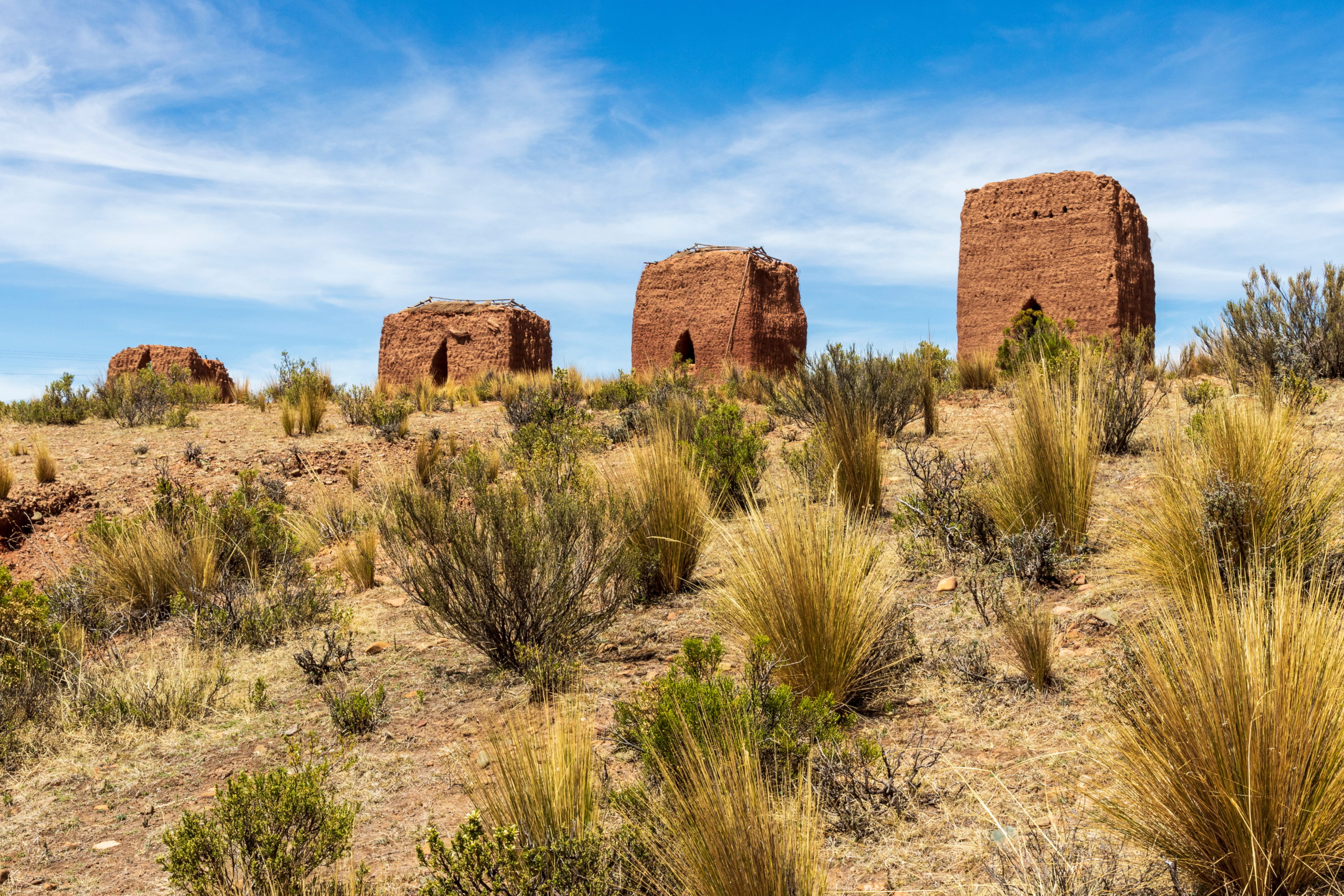
On the way to Sajama national park, there are planned stops for visiting archeological and cultural interest sites along the route, such as:
We arrive to Sajama town early afternoon for check-in, lunch, and a visit to hot springs before dinner and overnight at a local hotel.
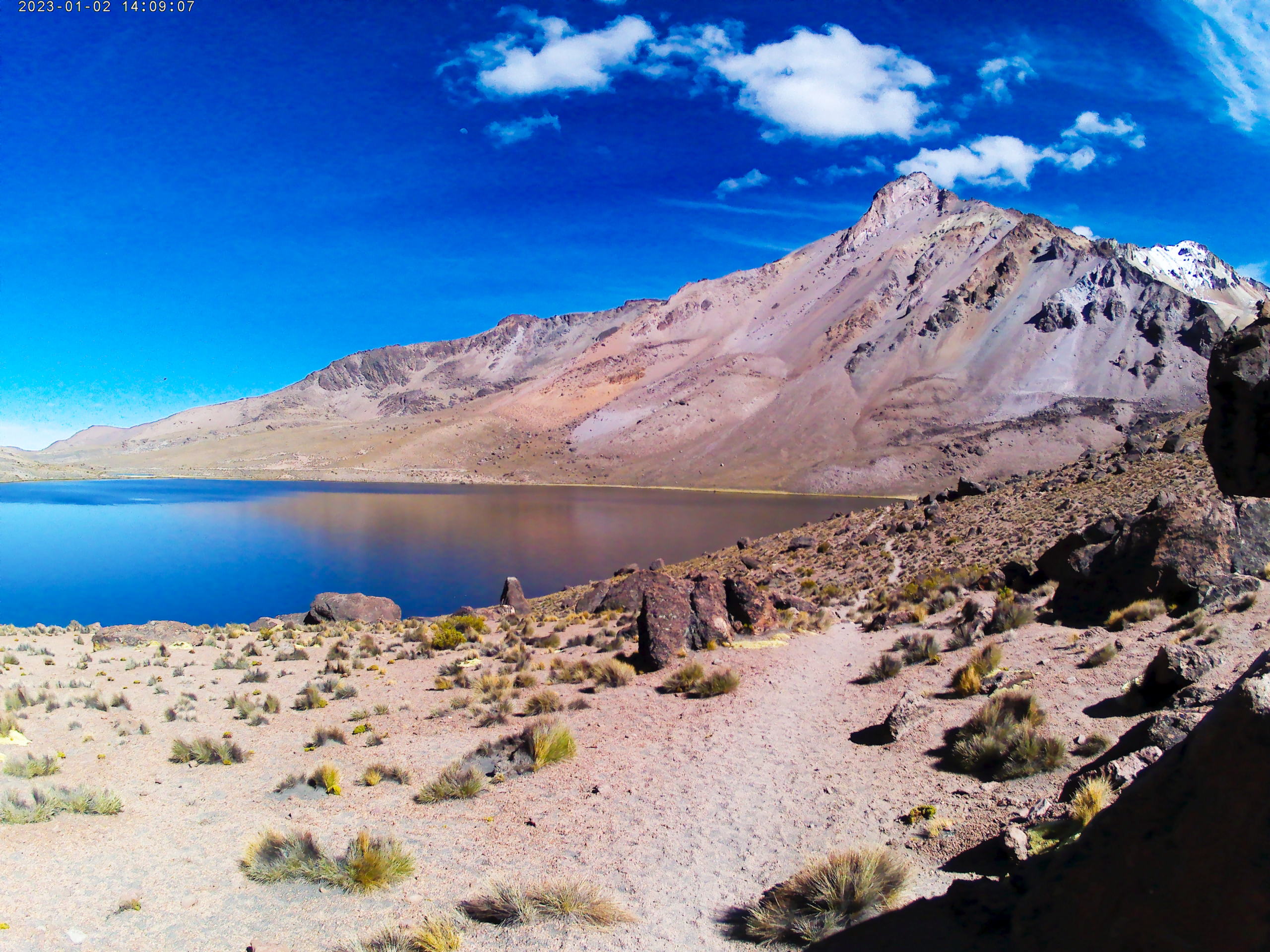
The journey begins early. You begin walking above 4,600 meters. The trail winds up across the hills of ancient volcanic mountains, surrounded by snow-capped giants. Under your boots, the ground is soft—fine volcanic sand and small, rounded pebbles. Each step is cushioned, surprisingly pleasant, as if the mountain itself invites you forward.
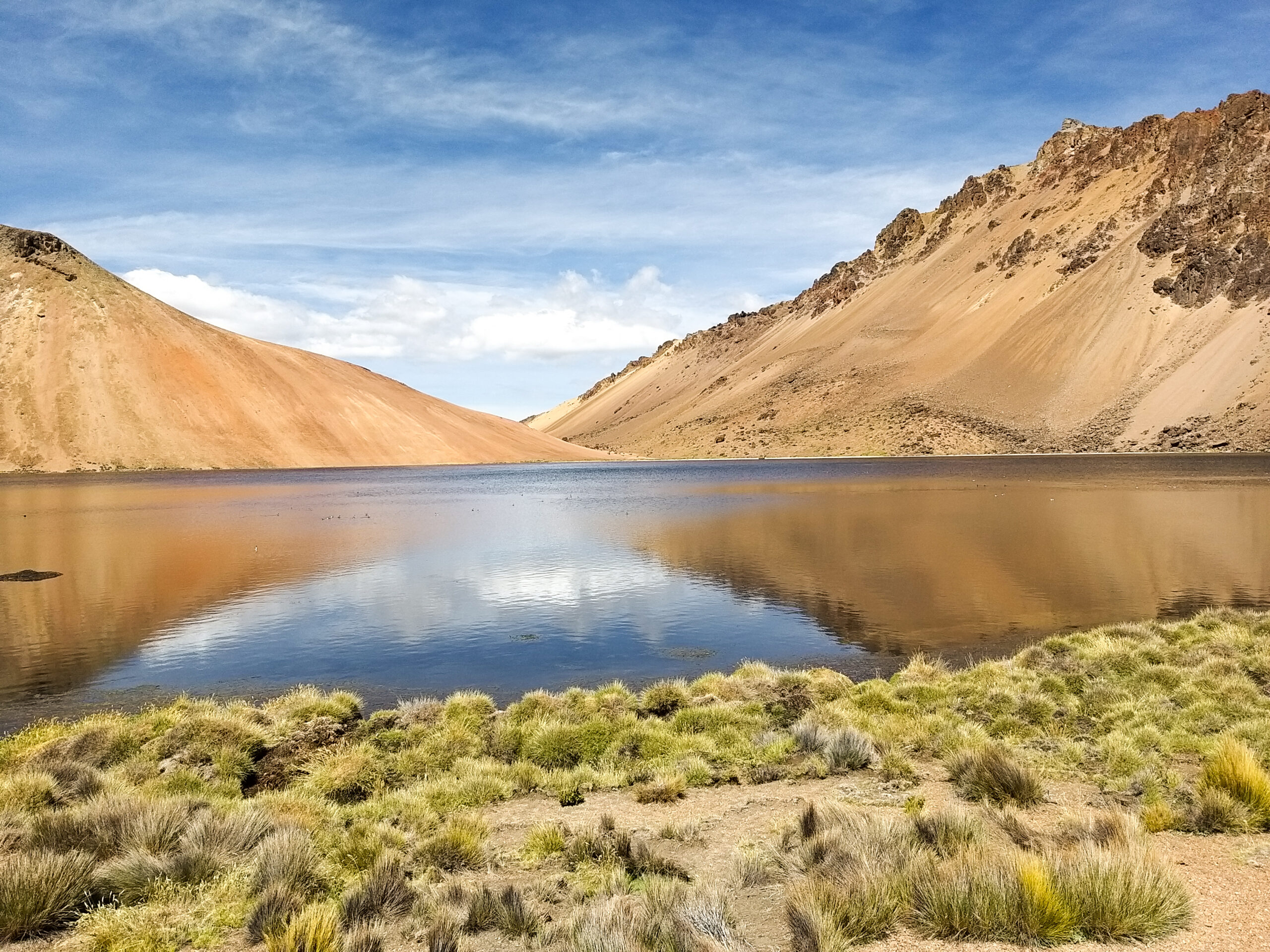
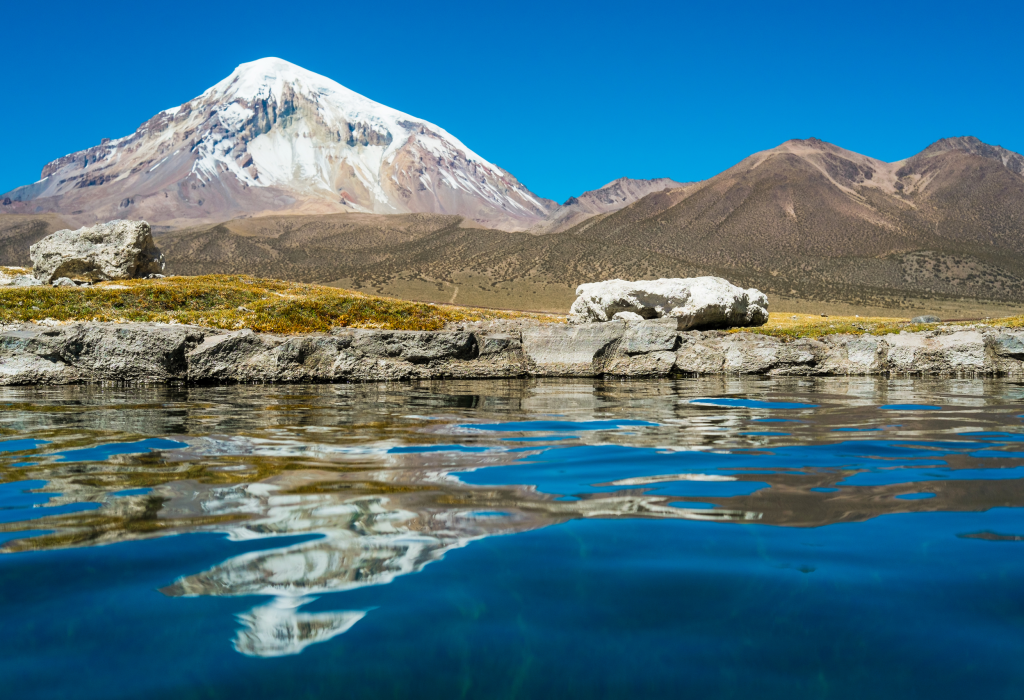
The paths are clear and well-defined, weaving between a series of high-altitude lagoons born from the surrounding peaks. Their surfaces shift from deep blue to metallic silver as the light changes, mirroring a sky so clear it feels almost unreal. You stop frequently—not because you are tired, but because each lagoon offers a new reflection, a new composition of water, sky, and stone.
Scattered across the slopes are the ancient, gnarled forests of Queñua trees (Polylepis). These rare, wind-sculpted sentinels—members of the rose family—grow almost exclusively here. Standing no taller than three meters, twisted and ancient, they form a final, enchanting woodland: a miniature forest clinging to the sky before the land opens into pure stone. Walking among them feels like passing through a natural cathedral.
And then, the wildlife reveals itself.
Graceful herds of llamas and alpacas graze on the sparse grasses, their silhouettes dark against the golden slopes. If you are lucky, you may spot the shy and elegant vicuñas—wild relatives of llamas, with their fine, valuable wool—moving in small groups.
But the true spectacle is at the water’s edge.
The high-altitude lagoons are vibrant hubs of life. Coots dabble in the shallows. Highland ducks glide across the surface. And with a stroke of magic, you see them: pink flamingos—Andean and James’s flamingos—wading near the shoreline, their colors vivid against the deep blue water.
Among the sun-warmed boulders, keep an eye out for the charming vizcacha, a rabbit-like rodent native to these highlands, often seen sunbathing on the rocks, its long tail curling behind it.
By late afternoon, you arrive at the overnight accommodation campsite tucked into the landscape. The sun begins to set. The peaks turn gold, then rose, then deep purple.
And then, the sky darkens.
You step outside. Above you, the Southern Milky Way spills across the heavens—denser, brighter, more alive than anything you have seen in the northern hemisphere. Constellations you do not recognize wheel overhead. Shooting stars trace silver lines. The silence is absolute.
You fall asleep wrapped in starlight.
Morning comes cold and brilliant. Frost glitters on the ground. Your breath fogs the air. But the sun climbs quickly, and with it, the temperature.
Today is shorter—a gentle walk through the final stretch of volcanic landscape. The trail follows the edge of more lagoons, their surfaces still and reflective in the morning light. Flamingos may still be feeding near the shore. Vicuñas watch from a distance.
At the end of the trek, you get your reward.
Natural hot springs nestle at the base of the mountains, surrounded by snow-capped peaks. The pools are fed by geothermal springs, their waters warm, mineral-rich, and impossibly soothing on legs that have walked above 4,600 meters.
You sink in. Let the heat soak into your muscles. Watch the clouds drift over the volcanoes. The trek is over, but the feeling—of having walked through a world of water, stone, and sky—stays.
Before the sun sets, we drive back to La Paz. The altiplano stretches beside you. The volcanoes fade into the distance. By late night, you return to the city—tired, content, and full of images that will not fade:
The soft volcanic sand beneath your boots
The mirror-like lagoons, shifting from blue to silver
The ancient Queñua forests, twisted and enchanted
Flamingos at the water’s edge
Vicuñas watching from the slopes
The Southern Milky Way, spilling across an impossible sky
The hot springs, warm and healing, beneath snow-capped giants
Two days. One night. An immersion into the elemental soul of the Western Andes.
 Why Trek Sajama’s High-Altitude Lagoons with AHE?
This is not a trek of rugged passes and dramatic descents. It is a trek of stillness, reflection, and otherworldly beauty—where the challenge is the altitude, but the trail is kind, and the rewards are profound.
When you book with Andes Heritage Expeditions, you are not just hiring a guide. You are stepping into a journey designed from your arrival to your farewell.
| Why AHE? | What You Get |
|---|---|
| Flamingos at altitude | Pink Andean flamingos wading in mirror-like lagoons |
 Queñua forests Queñua forests | Rare, wind-sculpted trees found almost nowhere else on Earth |
 Wildlife encounters Wildlife encounters | Llamas, alpacas, vicuñas, vizcachas, highland ducks, and coots |
 Volcanic landscapes Volcanic landscapes | Soft sand, rounded pebbles, and ancient rock formations |
 Snow-capped giants Snow-capped giants | Sajama, Parinacota, Pomerape – Bolivia’s most iconic volcanoes |
| The Southern Milky Way | A night under stars you have never seen before |
 Hot springs finale Hot springs finale | Natural thermal pools surrounded by peaks |
 Expert high-altitude guides Expert high-altitude guides | Trained for 4,600–5,100 m conditions, pacing, and safety |
We design tailor-made trekking experiences for every level of trekker – from high-altitude lagoons to tropical valleys and cultural immersion. We take care of every detail, from arrival to departure.
Walk with us. The Western Andes are calling.
 Quick Facts
| Detail | Information |
|---|---|
| Duration | 2 days / 1 night |
| Starting point | La Paz City (early morning pickup) |
| Difficulty | Medium (altitude is the challenge; the trail is gentle) |
| Maximum altitude | ~5,100 m (16,700 ft) |
| Minimum altitude | ~4,600 m (15,000 ft) |
| Total trekking distance | Approximately 18 –20 km over 2 days (gentle, unhurried pace) |
| Best season | August –April (warmer season – clear skies) |
| Accommodation | Lodge in Sajama Town and camping near the lagoons |
| Who it’s for | Hikers comfortable with high altitude; photographers; nature lovers; anyone seeking otherworldly beauty |
 Important Notes for Travelers
This trek begins above 4,600 meters and reaches over 5,100 meters. The air is thin. The sun is intense. The nights are cold.
You must:
Acclimatize in La Paz (3,650 m) for at least 2–3 days before starting
Hydrate aggressively (3–4 liters of water daily)
Avoid alcohol and heavy foods before and during the trek
Listen to your body and your guide
That said, the trail is gentle—no steep climbs, no rocky scrambles. The challenge is purely the altitude.
 Sturdy trekking boots (comfortable for walking on volcanic sand and pebbles)
Layered clothing: thermal base, fleece, insulated jacket, windproof outer
Warm hat, gloves, buff/neck gaiter (mornings and nights are cold)
Sunscreen (SPF 50+), lip balm, sunglasses with UV protection
Camera with extra batteries (cold drains batteries quickly)
Binoculars (for flamingos, vicuñas, and vizcachas)
Swimwear for the hot springs
| Time of Day | Conditions |
|---|---|
| Morning | Cold (below freezing), clear skies, intense sun once up |
| Afternoon | Cool to mild (5–15°C), strong UV, possible wind |
| Night | Very cold (below freezing), clear, spectacular stars |
Hikers comfortable with high altitude (4,600–5,100 m)
Photographers seeking mirror lagoons, flamingos, and volcanic landscapes
Nature lovers who want to see rare Queñua forests and Andean wildlife
Travelers who prefer gentle walking over steep, rugged terrain
Those who want a shorter trek (2 days) with a hot springs reward
 Not recommended for first-time high-altitude travelers without acclimatization
 Combine This Circuit with Other AHE Adventures
This 2-day trek pairs beautifully with:
Uyuni Salt Flats & Eduardo Abaroa Reserve – Sajama is on the way to the salt flats; combine for a 7–8 day Western Andes expedition
Quimsa Cruz / Torrini Pass – add 4 days of Eastern Andes trekking for complete contrast
Titikaka Lake & Kallawaya – add 6 days of sacred islands and healer culture
Let us know if you would like to build a custom multi-adventure package.