Bolivia Facts
Language
Spanish is the official language of Bolivia.
Another 39 languages are also spoken in different regions of the country being the most common: Quechua, Aymara (West) and Guarani (East). Half of the population has an indigenous mother tongue, which means that the vocabulary and pronunciation of Spanish spoken in Bolivia vary by region.
Currency
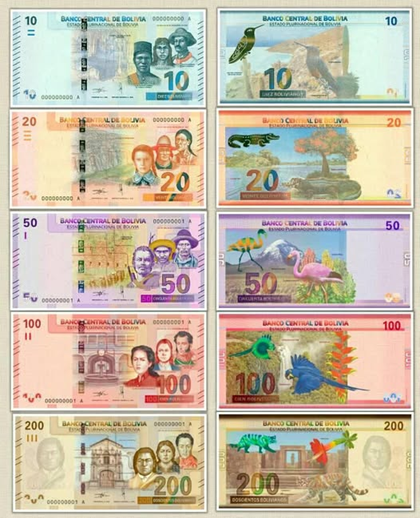
The national currency is the Boliviano (Bs). Banknotes are available in the following denominations: Bs 10, 20, 50, 100, and 200. Coins are available in denominations of Bs 5, 2, and 1, as well as 50, 20, and 10 centavos.
Currency Exchange/ATMs: It is best to exchange foreign currency at exchange bureaus. Hotels only accept US dollars.
American Express, Diners Club, MasterCard, and Visa credit cards are accepted at most major hotels and restaurants, but generally not at smaller establishments.
ATMs are available in most towns and major cities, but not in rural areas. If you are carrying traveler’s checks, it is recommended that they be in US dollars. Avoid exchanging money on the street.
Currency restrictions. The import or export of national or foreign currency is not restricted. However, the amount brought into or taken out of the country must be declared, starting at US$10,000 or its equivalent.
Customs
The items you can bring into Bolivia without paying tax are:
Used Goods: One camera, one laptop computer, one video camera and its accessories, one recorder, radio recorder or radio receiver, one cell phone only, sporting goods, one portable musical instrument, and strollers, wheelchairs for the disabled, and other personal orthopedic devices.
New Goods: If you intend to bring in new goods, you must demonstrate that they are not for commercial purposes and that their value does not exceed US$1,000, the amount established by law as the “tax-free allowance.” In addition, you may also bring in up to three liters of alcoholic beverages, up to 400 cigarettes, and up to 50 cigars or 500 grams of loose tobacco.
Health
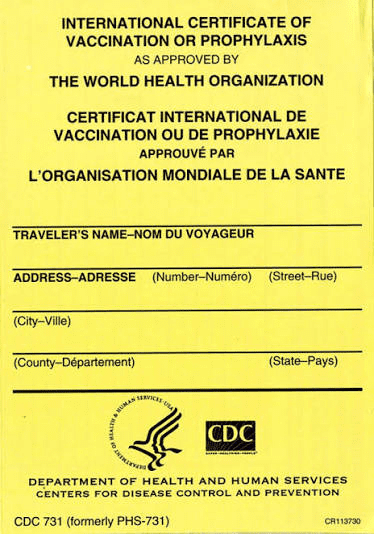
Travelers should ensure they have a valid yellow fever vaccination certificate before traveling to the Yungas, Chapare, and eastern part of Bolivia (Santa Cruz and Beni).
Malaria is another risk. It is recommended to take chloroquine tablets for chemoprophylaxis and always carry mosquito repellent.
If traveling to the north of the country, it is recommended to bring mefloquine, doxycycline, or atovaquone.
Vaccination against cholera is also recommended. Typhoid fever also poses a risk, especially outside of major cities.
It is important to be up-to-date on vaccination advice before traveling to this destination, such as the COVID-19 vaccine.
Vaccination against tuberculosis and hepatitis A and B is also recommended. Avoid eating food from street vendors and raw salads.
In lowland areas, there is a risk of contracting dengue, chikungunya, or Zika (three mosquito-borne viruses).
Visa Requirements to visit Bolivia
Visa requirements for Bolivia vary by nationality and can change, so check with the nearest Bolivian embassy or official government site well before travel.
As of December 2025, many tourists, including U.S. citizens and Europeans, can visit Bolivia visa-free for up to 90 days, requiring only a passport with six months validity, a round-trip ticket, and yellow fever vaccination certificate. Other nationalities may require a visa, obtained at a consulate or on arrival for roughly 30 days.
Be prepared to show onward/return tickets, proof of accommodation, and sufficient funds on arrival if asked. If you’re arriving from or transiting through a yellow‑fever area, bring an up‑to‑date vaccination certificate. For longer stays, study the procedures for extending visas or obtaining temporary residency through Bolivian immigration offices; overstaying can incur fines. Minors should carry birth certificates and parental consent letters when traveling without both parents.
Finally, keep photocopies or digital scans of passport and visa, register with your embassy if possible, and buy travel insurance that covers trip interruptions and medical evacuation.
You may visit the following link, for quick reference: Bolivian Consulate in Canada.