

Two lost mines • A pass above the clouds • The long descent into the Yungas
There is a trail in the Bolivian Andes that almost no one walks. It has no souvenir stalls, no marked signs, no crowds. What it does have: rusted mining tunnels swallowed by moss, a wind-scoured pass above 5,100 meters where condors turn slow circles, and a two-day plunge from the frozen roof of the world down into the steamy, orchid-draped rainforest of the Yungas.
This is the San Francisco–Reconquistada circuit—a raw, authentic, and beautifully lonely alternative to the over-traveled Takeshi Trail. It is for those who want to feel the Andes, not just photograph them.
Difficulty is medium to high. The altitude is serious. The rewards are solitude, contrast, and the kind of landscapes that rewire your sense of scale.
The morning begins early—before La Paz has shaken off its sleep. We drive southeast, leaving the city’s bowl of lights behind, heading into the bony spine of the Cordillera Real. The road winds past villages that seem glued to the mountainside, then dirt tracks that climb toward the abandoned San Francisco mine.
By mid-morning, we arrive. The mine sits at 4,200 meters, its collapsed entrances and rusted rail tracks half-buried in windblown dust. Above it all tower Illimani and Mururata—snow-capped giants that have watched over this place long before the miners came, and will remain long after the last iron beam turns to rust.
We walk around the old camp. Your guide tells the story: the rise of tin, the boom years, the eventual silence. We do not enter unstable tunnels, but the surface alone speaks volumes.
Then, we begin to climb.
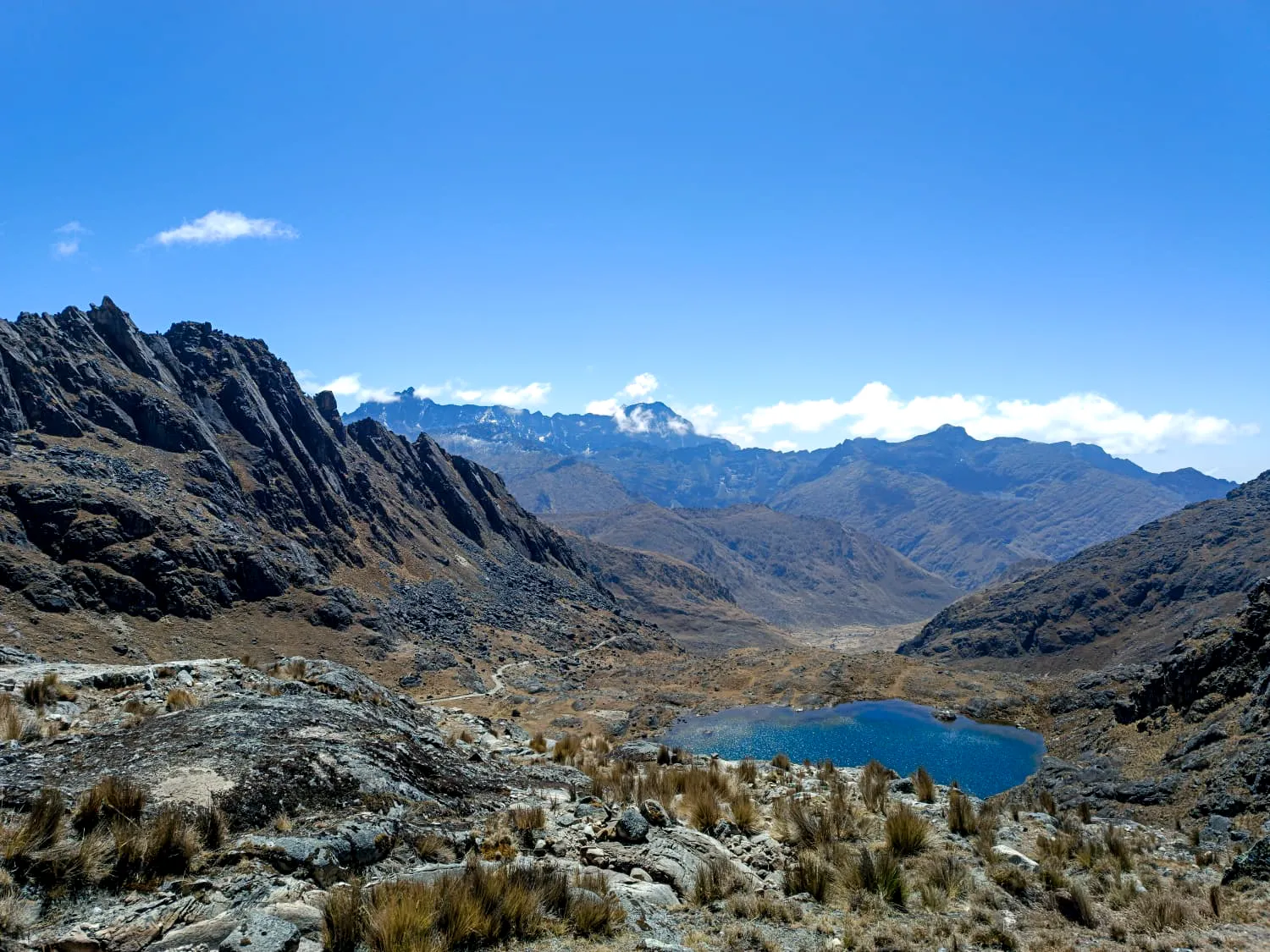
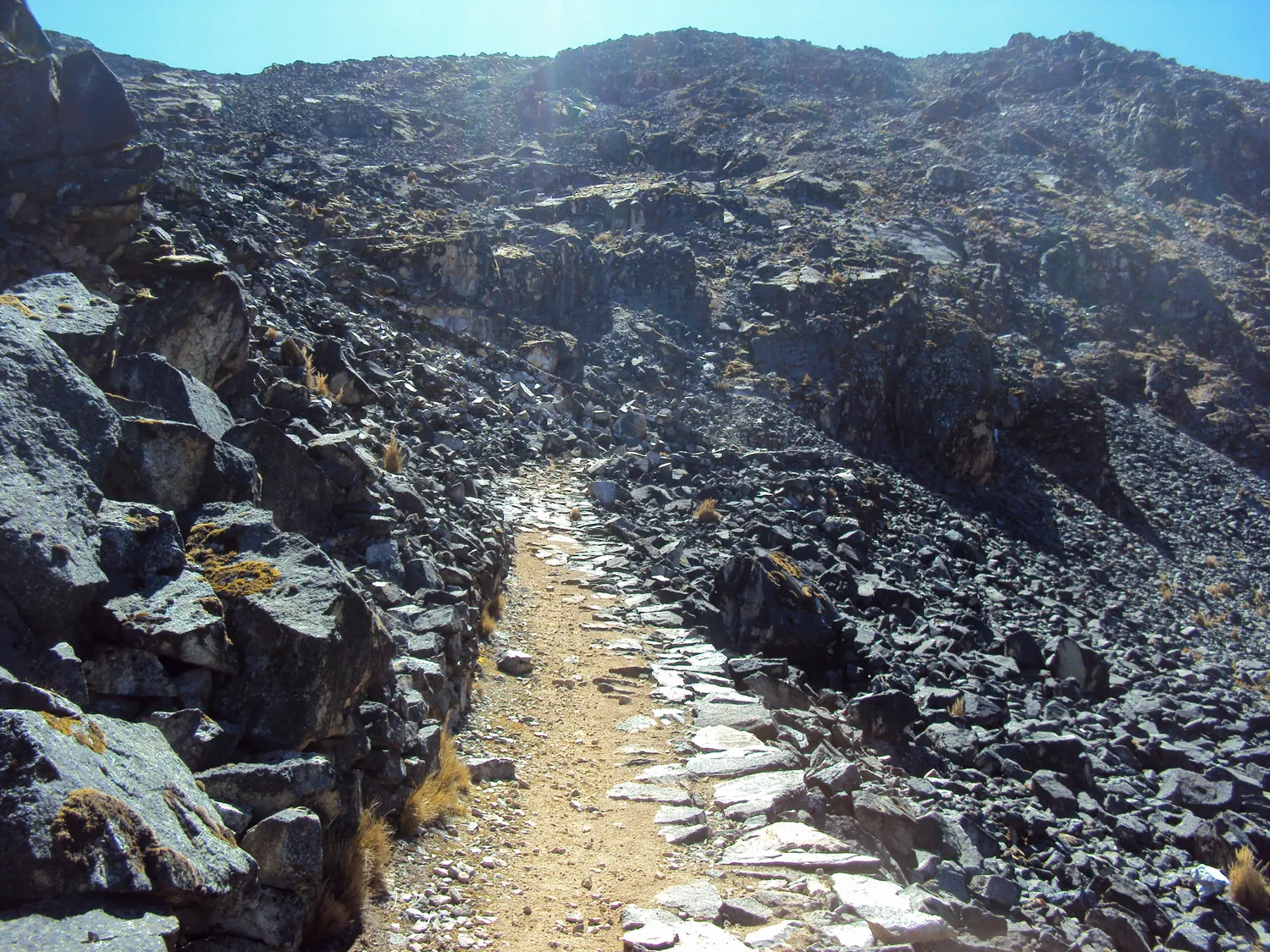
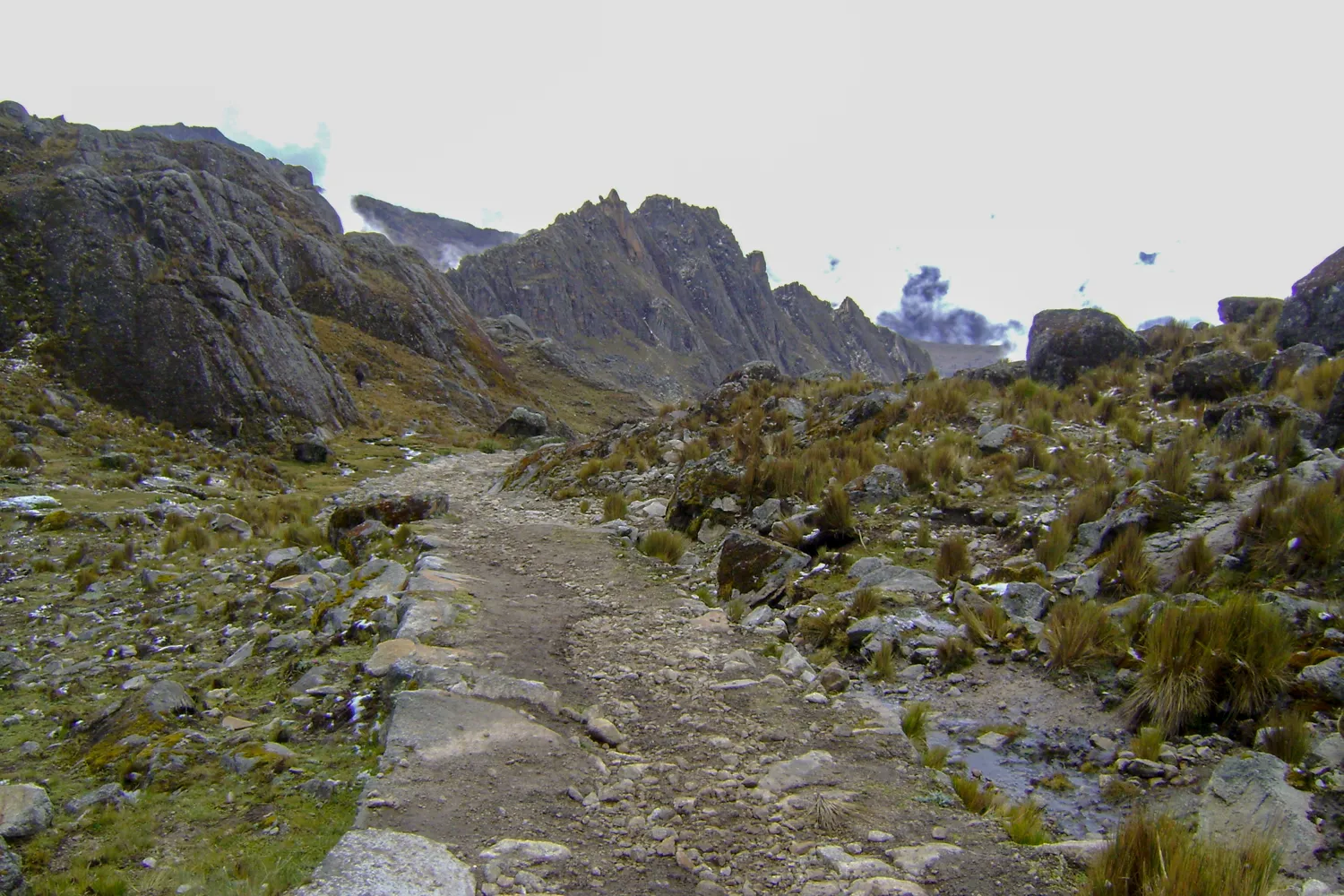
The trail rises steadily toward a hidden pass near 5,100–5,200 meters. The air grows thin. The landscape turns lunar: rocky, silent, treeless. Only the crunch of boots on scree and the distant whistle of wind. High-altitude lakes appear—small, mirror-still, impossibly blue.
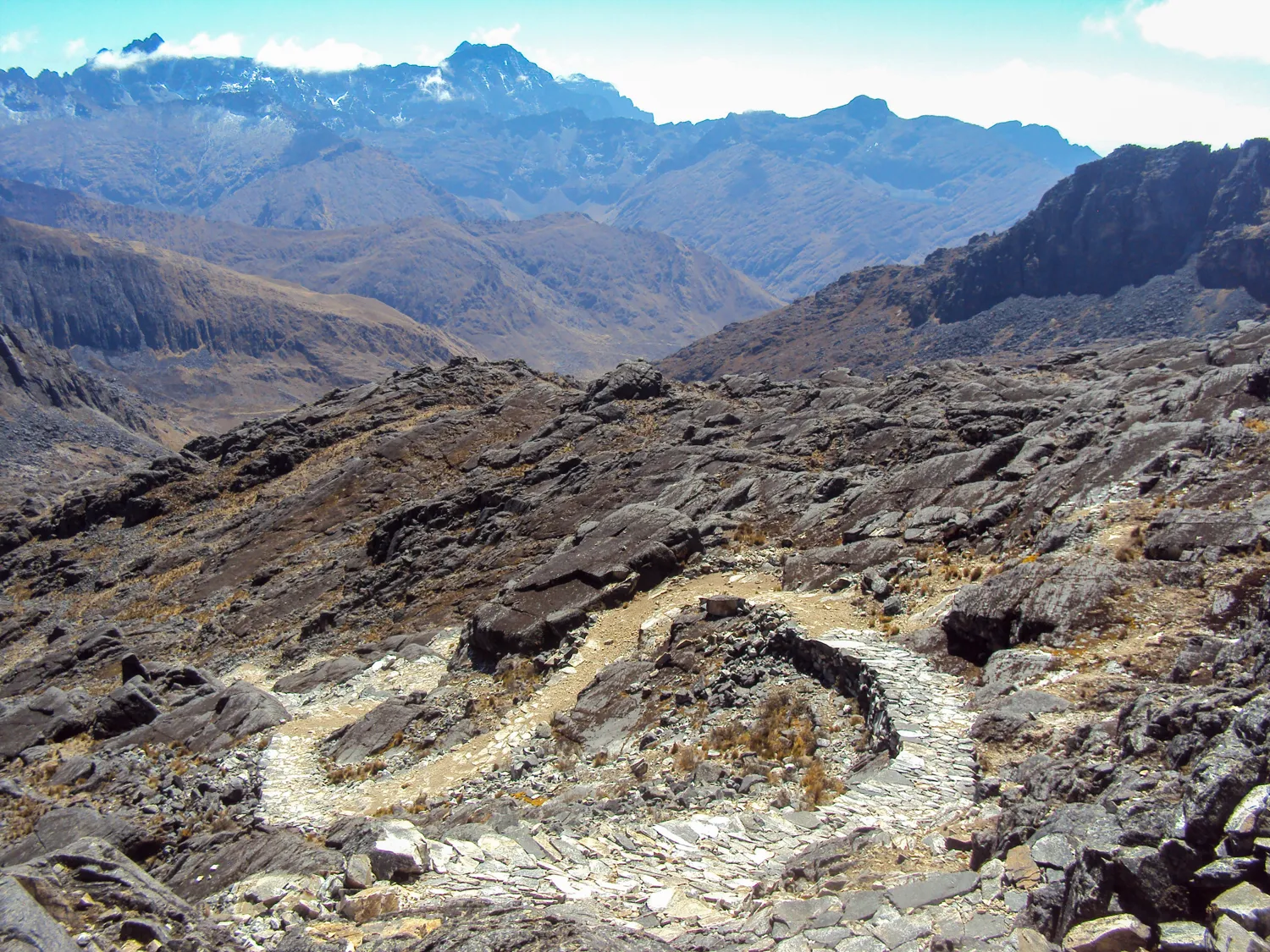
At the top, you stop. Breathe slowly. Look west: the Royal Andes stretch toward the horizon. Look east: a green abyss, the Yungas, waiting far below.
Then, the descent begins. And with it, the transformation.
At first, only scattered grasses appear. Then shrubs. Then the first stunted, wind-shaped trees. By late afternoon, when we arrive in Totorapata, the air has already warmed. This small settlement of shepherds and miners sits at around 3,800 meters—still high, but softer.
We stay overnight in tents. After dark, the stars come out—more stars than you have ever seen, spilling across a sky unbroken by any city light.
You fall asleep to the distant bark of a dog and the quiet creak of the old house.
Morning in Totorapata is cold and clear. Breakfast is coffee, fresh bread, and maybe some local cheese from the nearby community’s cows. The sun has not yet touched the valley floor, but the highest peaks are already burning gold.
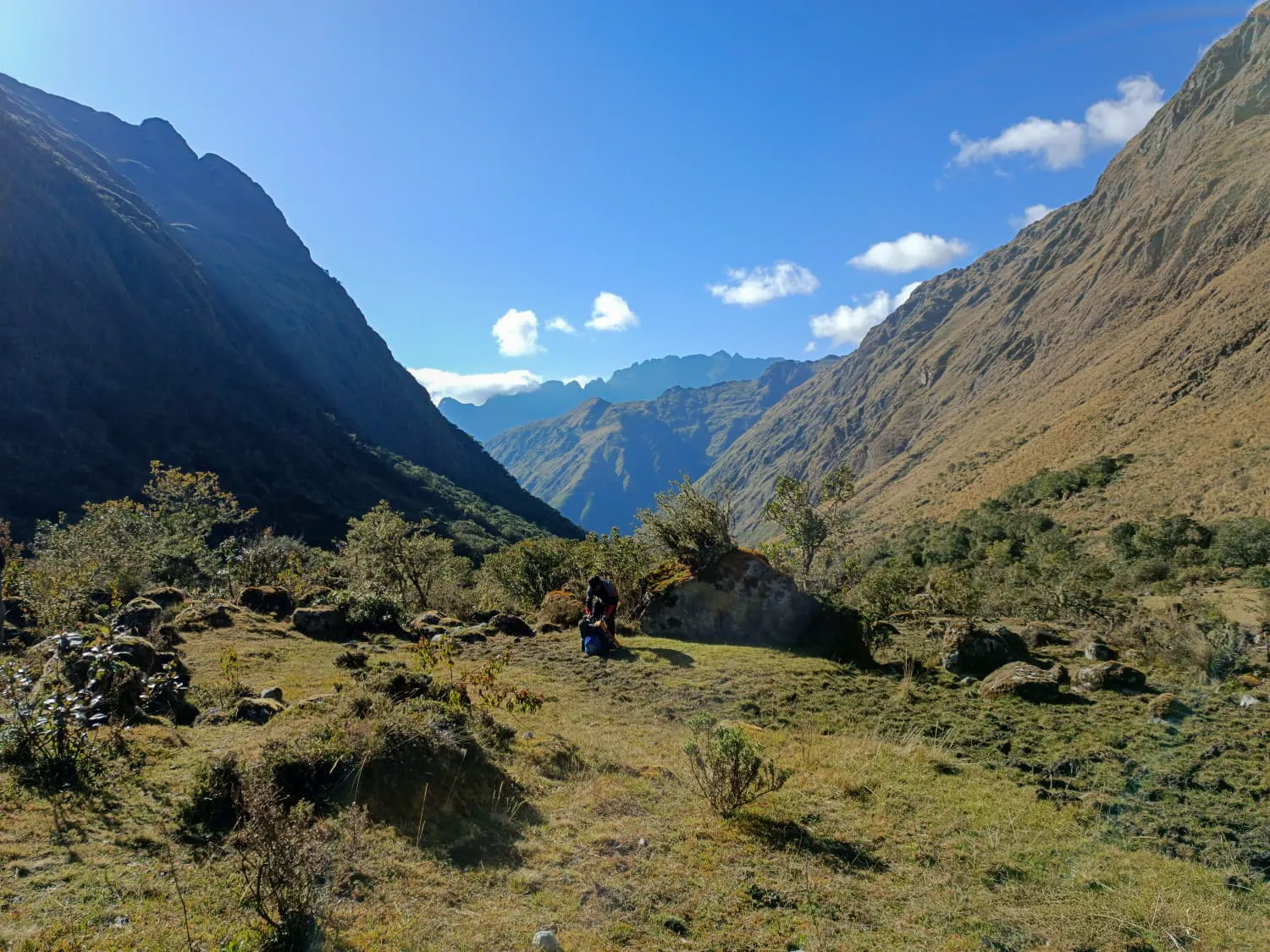
We leave at mid-morning. Today is all about descent—and later an ascent to the Reconquistada Mine. However, the change is felt from high Andean grassland into the humid, tangled, breathing jungle of the Yungas.
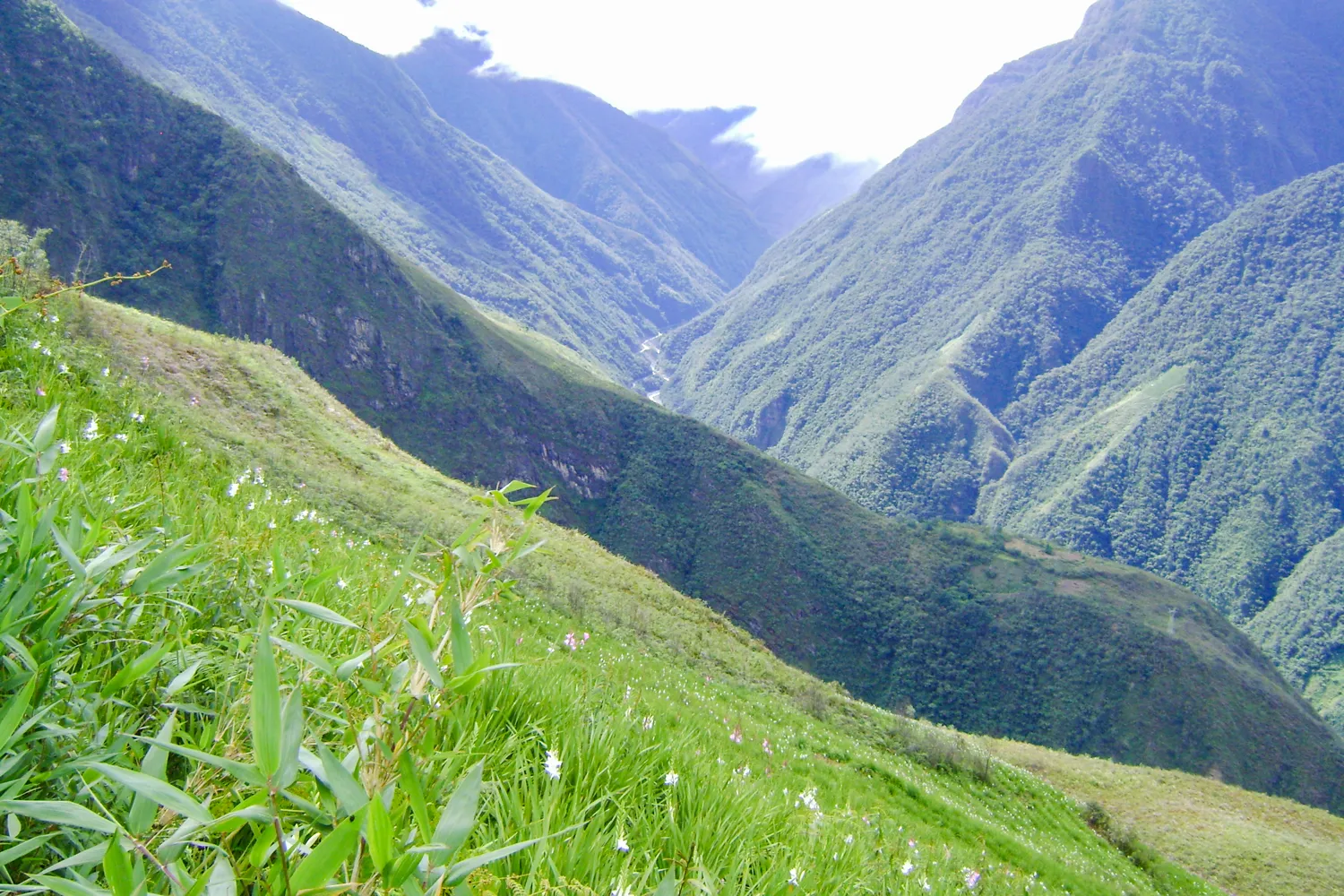
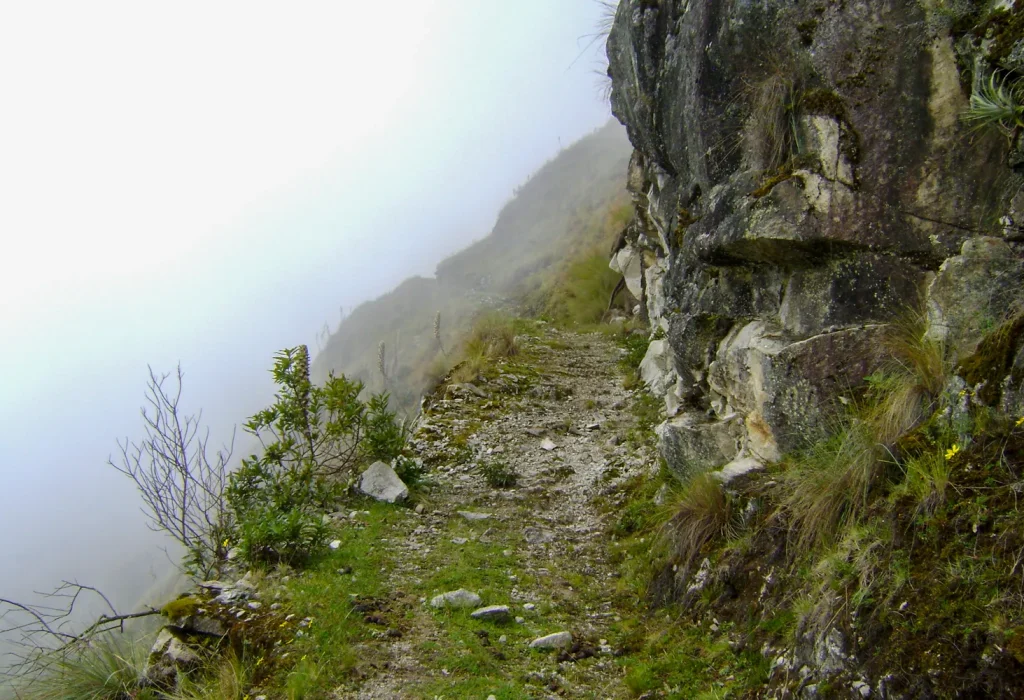
The trail follows old mule paths, crossing streams on log bridges, passing through patches of cloud forest where moss hangs from every branch. The air thickens. The light turns green and filtered. Orchids appear on tree trunks. Birds you have never seen—tanagers, hummingbirds, toucanets—flash through the canopy.
Then, we climb up again towards Reconquistada mine, where your guide brings out headlamps, and we step carefully into the old tunnels—short, safe sections where miners once worked by candlelight. The darkness is absolute. The silence, heavy. For a few minutes, you are inside the mountain itself.
When we emerge, the sunlight feels impossibly bright.
We continue descending. The vegetation grows denser. The sound of rushing water follows us—first a trickle, then a stream, then a river crashing through a canyon.
By early afternoon, we arrive in Picho—a small community tucked into the Yungas hills at around 2,200 meters. The air is warm and fragrant.The trail ends here, at the edge of a road that winds back toward La Paz.
We board our vehicle and begin the drive home. The road clings to vertiginous cliffs, dropping through layers of cloud and green. By evening, La Paz appears below—a sea of lights in its high bowl.
You arrive tired, dusty, and quietly changed.
Two days. Two mines. One pass above 5,000 meters. And a descent through every shade of green the world has to offer.
 Why This Trek Stays With You
It is not the polished trek. It is not the one with hot springs and comfortable lodges. It is the trek where you feel the Andes in your bones: the thin air, the abandoned iron, the sudden explosion of jungle after the silence of the puna.
You will remember:
The rusted skeleton of the San Francisco mine against a snow-capped mountain
The moment you crest the 5,100-meter pass and see both high desert and green abyss
The old tunnels of Reconquistada, dark and cool, holding the ghosts of miners who left decades ago
The first orchid you spot on a dripping branch—proof that you have crossed from one world into another
The quiet of Totorapata at night, and the stary night the Andean landscape offers
 Quick Facts
| Detail | Information |
|---|---|
| Duration | 2 days / 1 night |
| Starting point | La Paz City (early morning pickup) |
| Difficulty | Medium–High |
| Maximum altitude | ~5,100–5,200 m (16,400–17,000 ft) |
| Minimum altitude | ~2,200 m (7,200 ft) |
| Trekking distance | Approximately 18–22 km |
| Best season | April–October (dry season) |
| Accommodation | Tents / Basic community lodge in Totorapata |
| Who it’s for | Adventurers with high-altitude experience, seeking solitude and authenticity |
 A Note on Altitude
This trek reaches over 5,100 meters on the first day. That is not a number—it is a reality. The air is half what you are used to. Steps become deliberate. Headaches can appear.
You must acclimatize in La Paz for at least 2–3 days before attempting this route. Hydrate constantly. Move slowly. Listen to your body. And trust your AHE guide—they know this mountain, and they know how to keep you safe.
The reward, for those who prepare properly, is a landscape few travelers ever see.
We do not offer this route because it is easy. We offer it because it is real—and because almost no one else does. Your guide carries not just a map, but the stories of the miners, the shepherds, and the mountains themselves. You walk through tunnels with a headlamp, not a soundtrack.
This is the Andes as it still is in the hidden corners: tough, beautiful, and deeply generous to those who come with respect.