

Andes Heritage Expeditions, designing customized trekking experiences for every level of trekker, taking care of every detail from the moment you land to the moment you depart Bolivia.

2 Days
Medium-High
4-10 Guests
4200 / 5200 / 2800 M
Towering granite walls • A natural stone city • Clear mountain streams • From high pass to green valley
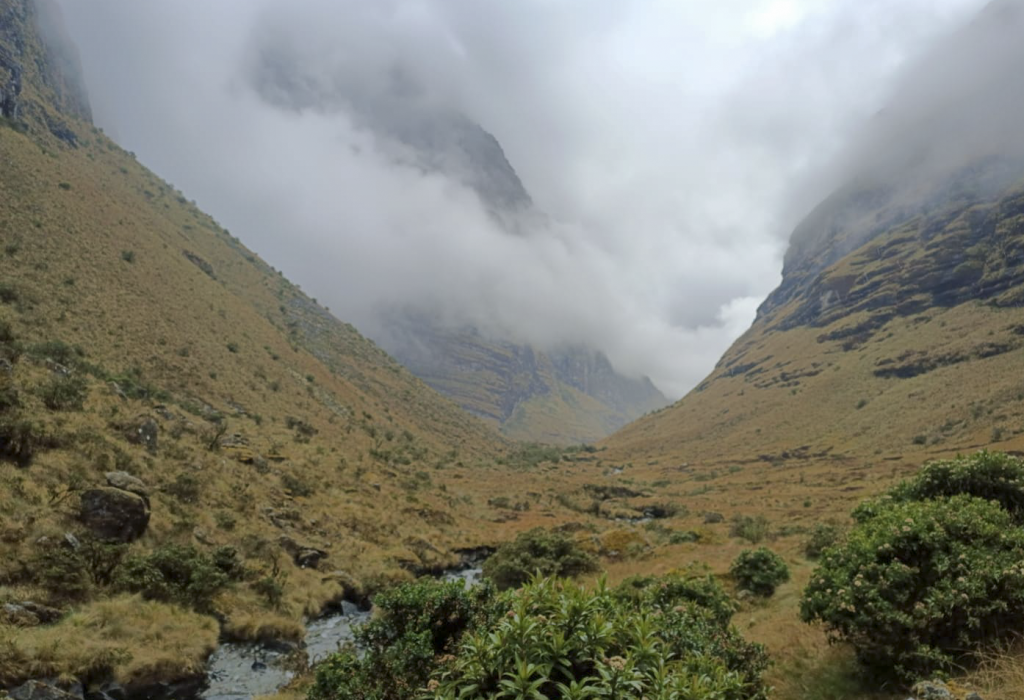
Just east of La Paz, hidden behind a ridge that most travelers never cross, there is a valley where the mountains rise like towering walls of sculpted stone. This is Asirumarca—a name that whispers of ancient places, of rock formations that resemble buildings, of a landscape that feels less like nature and more like the ruins of a city built by giants.
Over two days and one night, you will climb from a high open valley at 4,200 meters toward a mountain pass near 5,200 meters, then descend through a dramatic granite canyon all the way to 2,800 meters—passing through distinct ecosystems, from stark alpine silence to greener, warmer air.
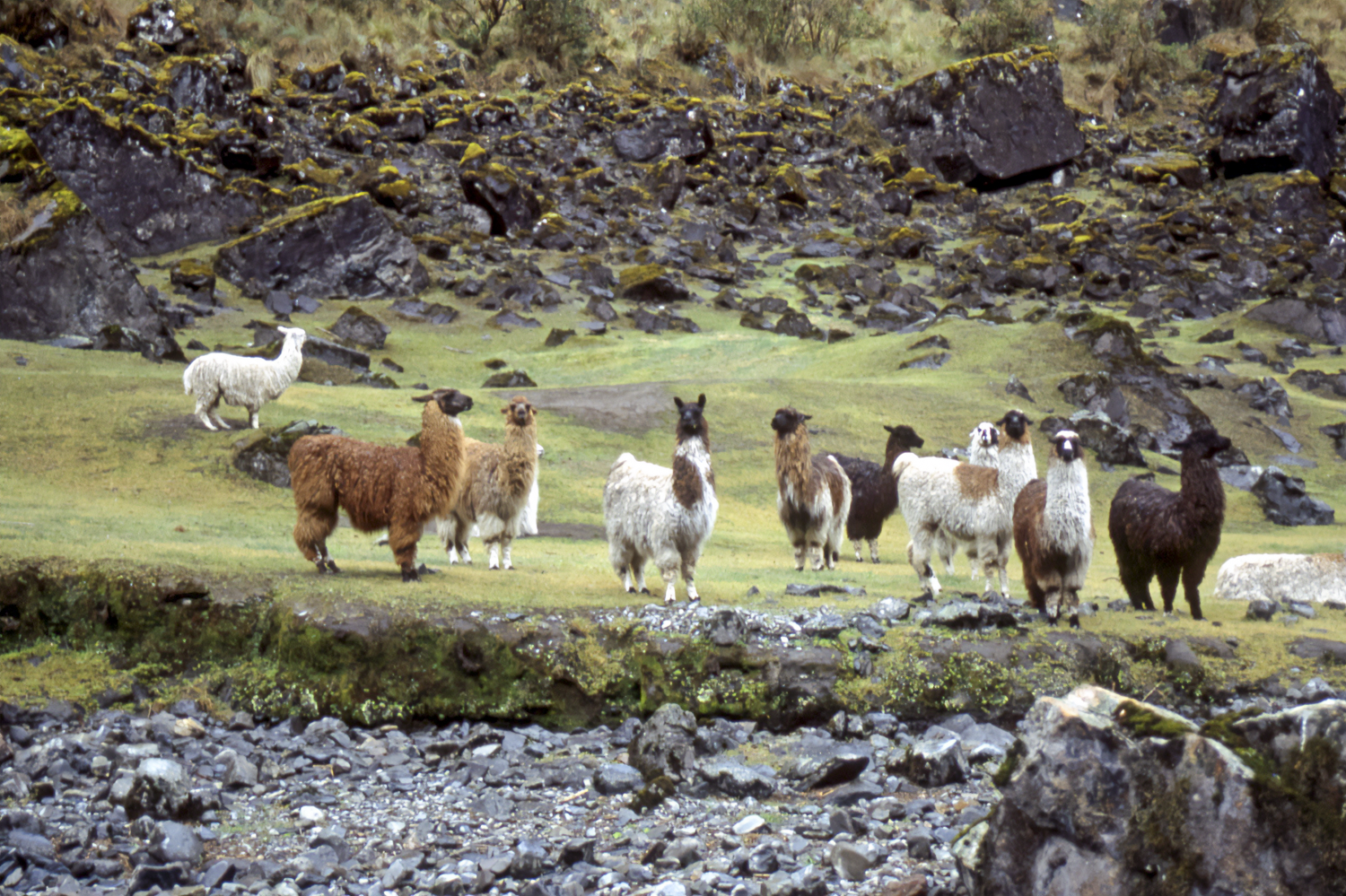
Llamas and alpacas graze on sparse grasses. Clear streams tumble into small waterfalls. And everywhere, the granite walls rise around you—strange, beautiful, and utterly unforgettable.
This is not a trek for conquering. It is a trek for wandering through a stone cathedral, with only the wind and the water for company.
Difficulty is medium to high. The altitude is real. The rewards are extraordinary.
The morning drive from La Paz is short but dramatic. Within an hour, the city’s sprawl falls away, replaced by open altiplano, then rolling hills, then the first serious peaks of the Cordillera. You are heading northeast, toward a hidden valley that does not appear on tourist maps.
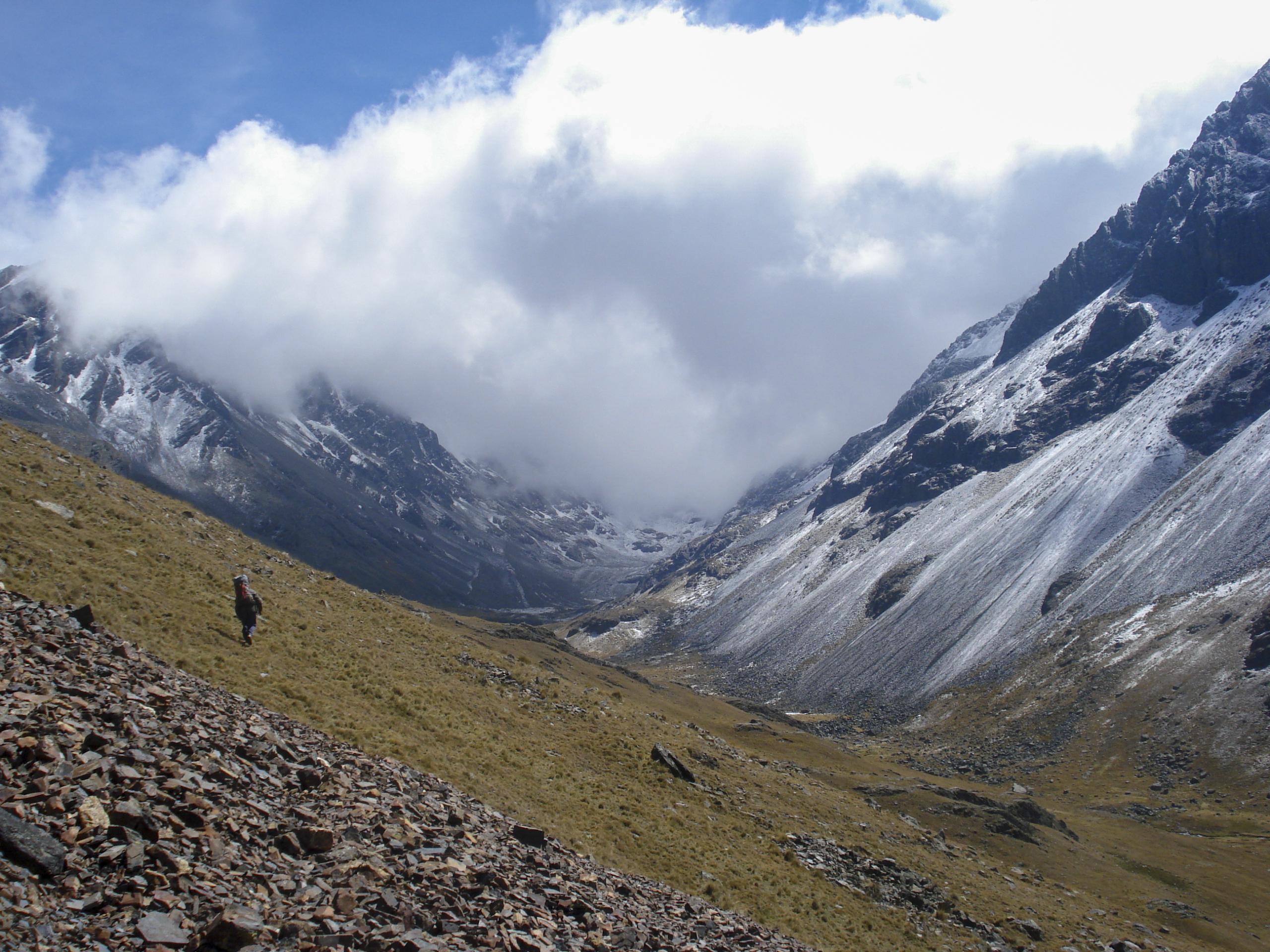
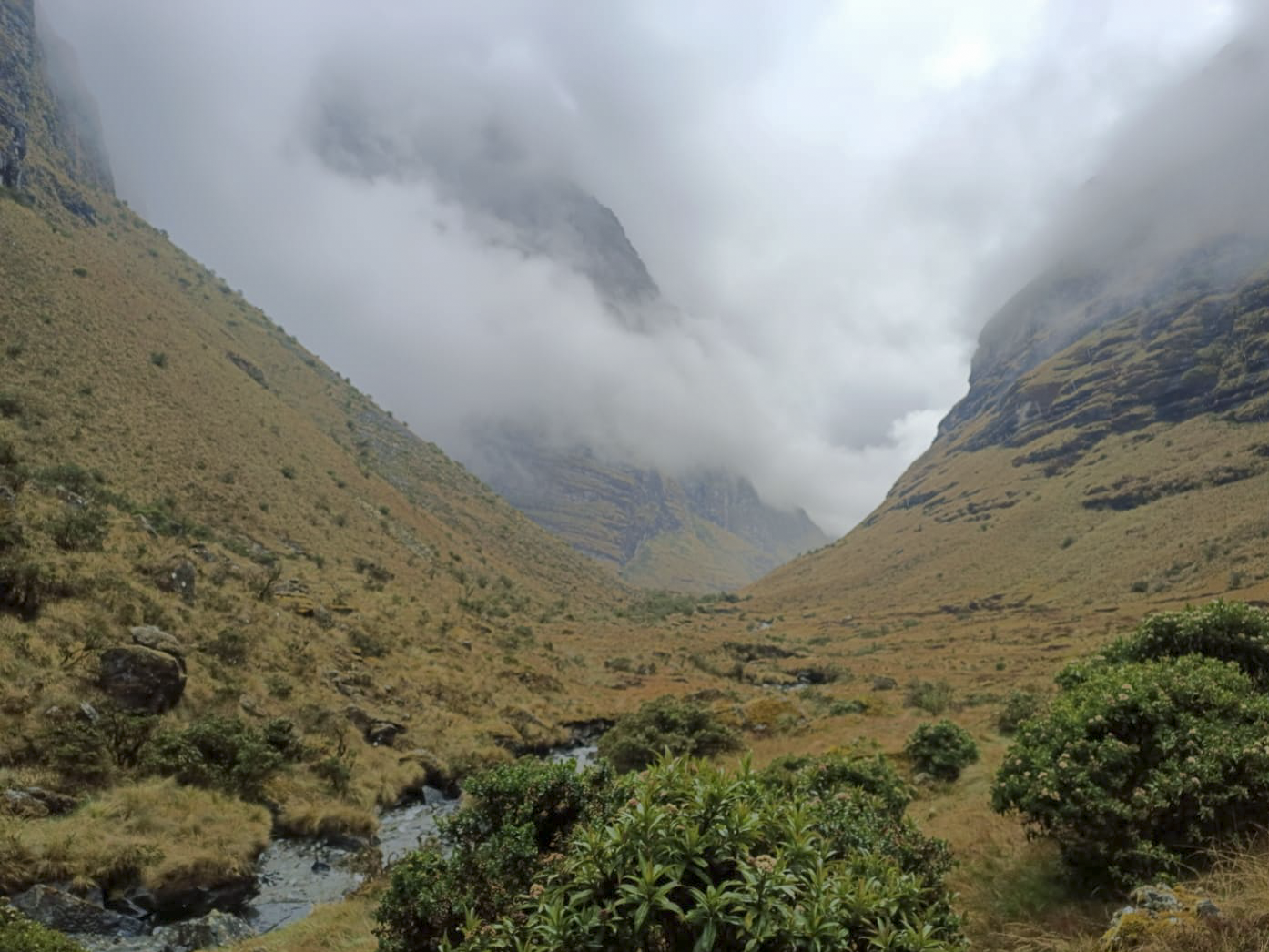
By mid-morning, you arrive at the trailhead: a high, open valley at approximately 4,200 meters. The air is thin and bright. The sky is an intense, deep blue. Around you, the peaks feel close—their rocky flanks streaked with snow, their summits disappearing into cotton clouds.
The trail begins gently. It is a faint but friendly path, climbing slowly toward a mountain pass in the distance. The ascent is gradual and comfortable for regular hikers, giving you time to adjust to the altitude and—just as importantly—to the silence.
Because the silence here is something you feel.
There are no cars, no voices, no machines. Only the crunch of your boots on stone, the whisper of wind, and the occasional distant cry of a bird. You walk at your own pace. Your guide sets a steady rhythm. The pass grows closer with every step.
Around you, the landscape is stark and beautiful: rocky slopes, patches of hardy grass, and the first scattered herds of llamas and alpacas grazing on the sparse vegetation. They lift their heads to watch you pass, then return to their grazing—unconcerned, as if trekkers are a rare but accepted part of their world.
By early afternoon, you reach the pass near 5,200 meters.
The world opens.
From here, you can see both directions: the high valley you have climbed, falling away behind you, and—ahead—the long granite valley that will carry you down to the green lowlands. The peaks on either side rise like sentinels. The sky seems impossibly vast.
You rest here. Lunch with a view. Photographs that will never quite capture the feeling of standing at the roof of this hidden world.
Then, the descent begins.
You cross into the granite valley, and everything changes.
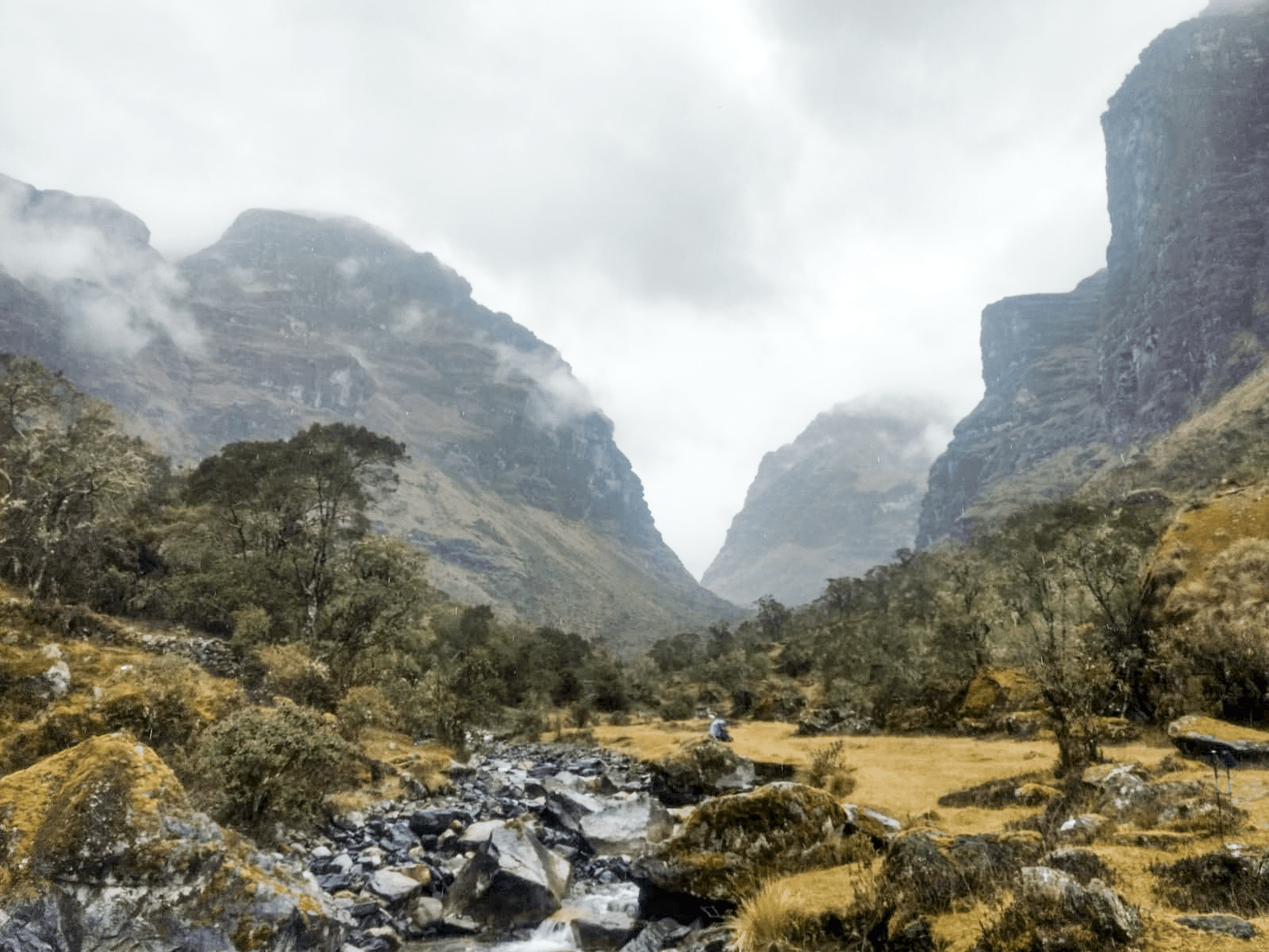
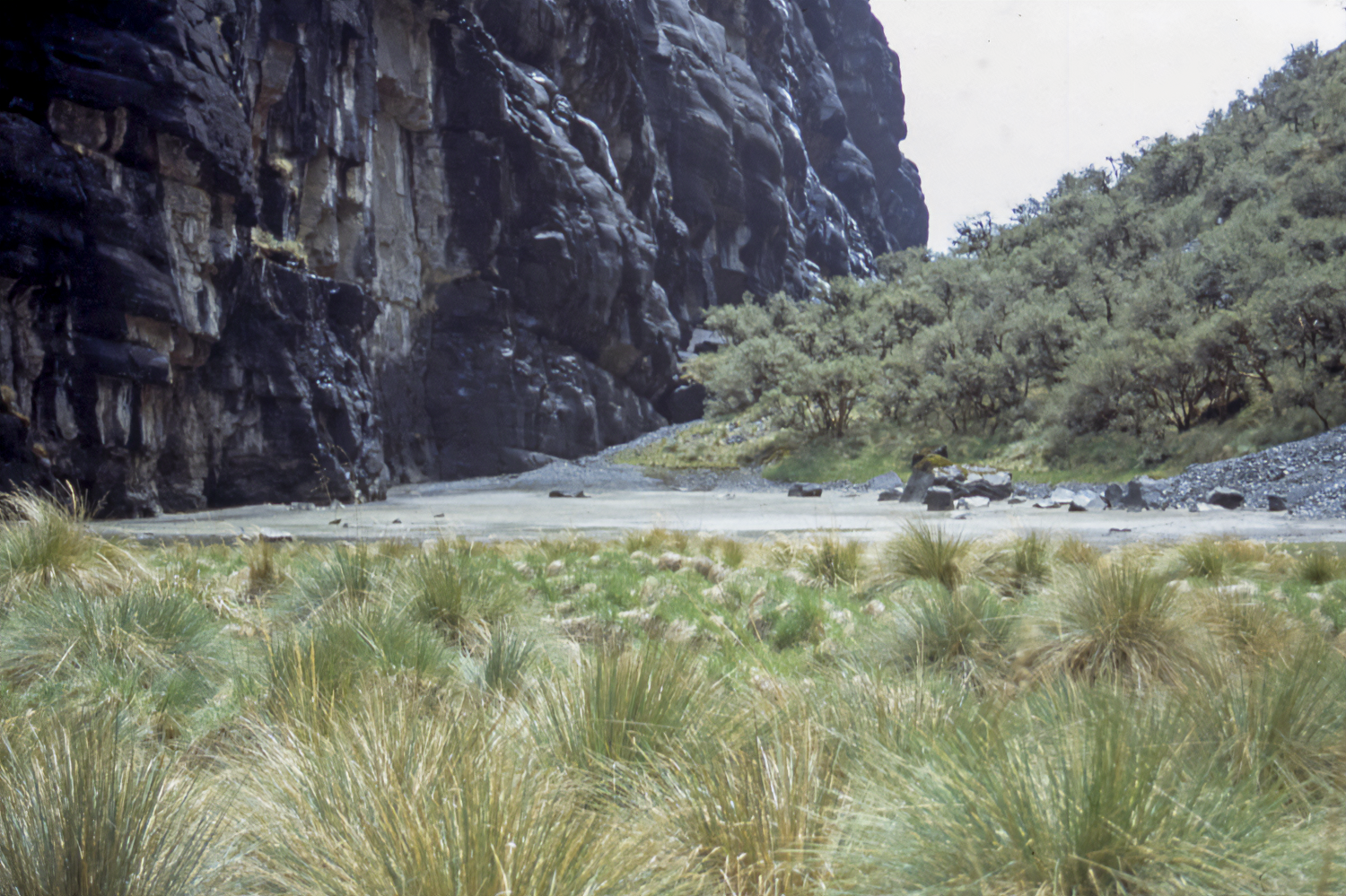
The rock walls rise on both sides—towering, sculpted, strange. They are not smooth like the peaks behind you. They are jagged, columnar, almost architectural. Some formations resemble buildings. Others look like towers, or walls, or the ruins of some ancient fortress. You walk between them, and the sensation is unmistakable: you are moving through a stone city shaped by nature and time.
This is Asirumarca.
The trail stays close to clear mountain streams, where water spills into small waterfalls, gently breaking the silence of these remote highlands. The ecosystem here is remarkably well preserved—far from any road, any town, any sign of modern life. Birds you have never seen flit between the rocks. A condor turns slow circles far above.
As the sun begins to lower, you find your overnight spot—a simple campsite tucked among the granite walls. Dinner is warm and simple. The stars emerge one by one, then all at once, spilling across a sky unbroken by any light pollution.
You fall asleep to the sound of flowing water.
Morning comes slowly in the granite valley. The sun touches the highest rock towers first, then creeps down the canyon walls. Breakfast is coffee, bread, maybe some hot porridge—fuel for the day ahead.
Today, the trail leads you into a dramatic canyon, carved by water and centuries of erosion.
The mountains rise steeply on both sides, their walls closing in, then opening, then closing again. The path follows the stream, crossing it occasionally on natural stone bridges or carefully placed rocks. Small waterfalls tumble from side canyons. The sound of rushing water echoes off the granite.
You walk through the canyon for several hours. Each bend reveals a new composition: a shaft of light cutting through the gap, a pool of clear water reflecting the walls, a patch of green moss clinging to the rock.
And then, gradually, the canyon begins to widen.
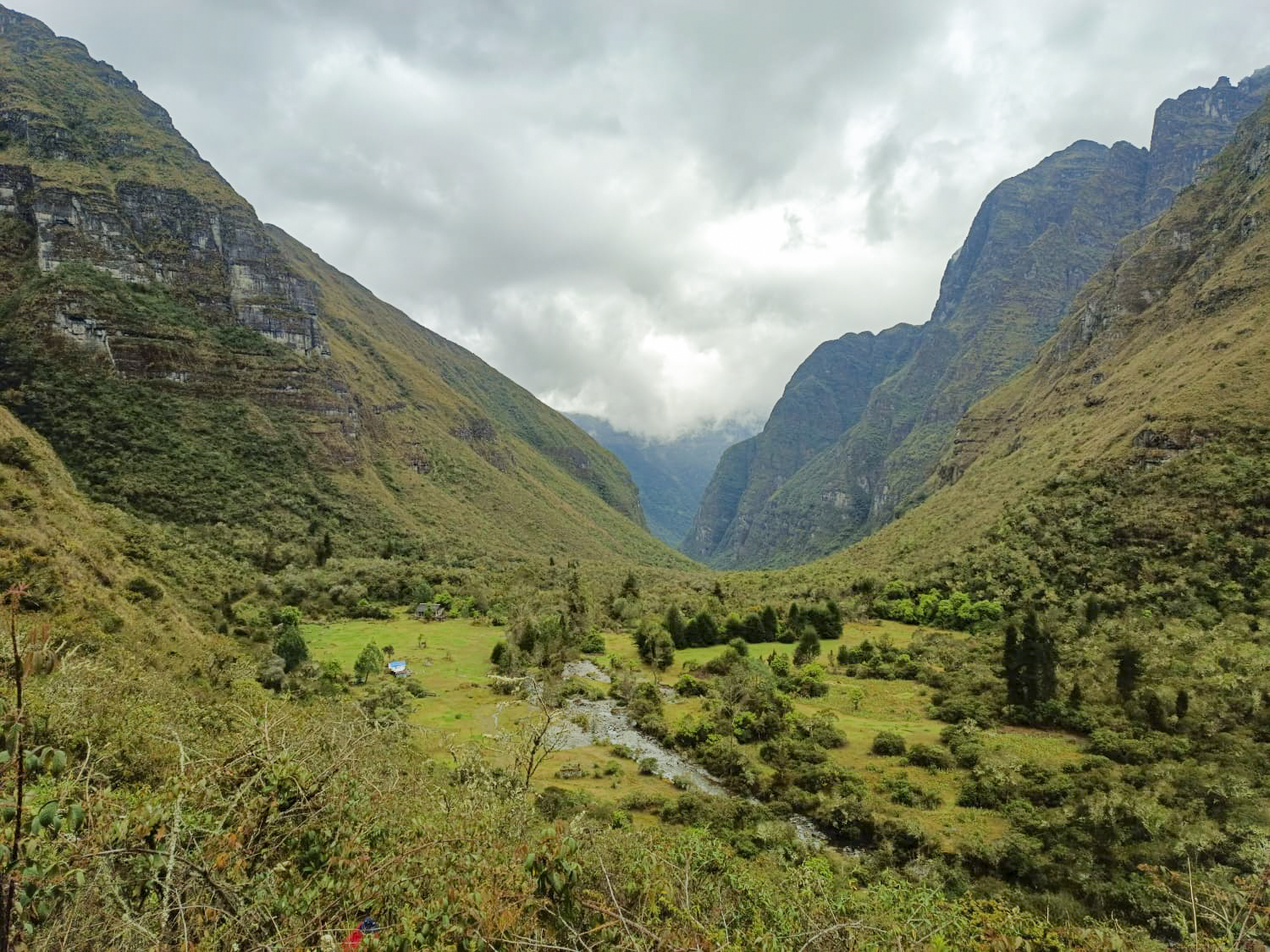
The air grows warmer. The vegetation becomes thicker—first scattered shrubs, then grasses, then the first trees.
You are descending toward milder air and greener landscapes.
By early afternoon, you emerge from the canyon into a final, open valley.
Your transportation waits at the trail’s end, near a small settlement at approximately 2,800 meters. Cold drinks. Stretching legs. Quiet smiles of satisfaction.
The drive back to La Paz winds through the foothills, passing small farms and villages. By late afternoon, you return to the city—tired, dusty, and full of images that will not fade:
The high open valley at 4,200 meters, silent and vast
The pass at 5,200 meters, where the world opened in all directions
The granite valley of Asirumarca, where stone towers rise like a natural city
The clear streams and small waterfalls, breaking the silence
The dramatic canyon, carved by water and time
The descent into greener, warmer air
Two days. One hidden valley. An unforgettable immersion in the high Andes.
This is not the most famous trek near La Paz. It is not crowded. It does not have souvenir stalls or marked trails. What it has is solitude, dramatic granite architecture, and a descent through multiple ecosystems in just two days.
When you book with Andes Heritage Expeditions, you are not just hiring a guide. You are stepping into a journey designed from your arrival to your farewell.
| Why AHE? | What You Get |
|---|---|
| 🏙️ The “Stone City” | A granite valley that feels like walking through natural architecture |
| 🦙 High-altitude wildlife | Llamas, alpacas, Andean birds, and possibly condors |
| 💧 Streams & waterfalls | Clear mountain water accompanies you for most of the trek |
| 🏔️ Dramatic altitude range | From 5,200 m pass to 2,800 m green valley in two days |
| 🧭 Expert local guides | Route-finding in an unmarked but spectacular valley |
| 🚐 Close to La Paz | Short drive means more time on the trail |
| 🔗 Combinable | Perfectly paired with Khasiri Lake (Day 5 extension) |
| 🎒 Fully supported | Meals, camping gear (if overnight), and transport arranged |
We design tailor-made trekking experiences for every level of trekker – from high granite peaks to lush valleys and cultural immersion. We take care of every detail, from arrival to departure.
Walk with us. The stone city is waiting.
| Detail | Information |
|---|---|
| Duration | 2 days / 1 night |
| Starting point | La Paz City (morning pickup) |
| Difficulty | Medium–High |
| Maximum altitude | ~5,200 m (17,060 ft) |
| Minimum altitude | ~2,800 m (9,200 ft) |
| Total trekking distance | Approximately 15–20 km over 2 days |
| Best season | April–October (dry season) |
| Accommodation | Camping or basic mountain shelter |
| Who it’s for | Regular hikers with good acclimatization; previous high-altitude experience helpful |
The trek reaches 5,200 meters on Day 1. This is serious altitude.
You must:
Acclimatize in La Paz (3,650 m) for at least 2–3 days before starting
Hydrate aggressively
Listen to your body and your guide
That said, the ascent is gradual and the trail is forgiving. Regular hikers with proper acclimatization do well here.
✅ Sturdy trekking boots (ankle support helpful on rocky sections)
✅ Layered clothing (thermal, fleece, waterproof/windproof outer)
✅ Warm hat and gloves (cold at the pass)
✅ Sunscreen, lip balm, sunglasses
✅ Daypack (15–25 L)
✅ Water bottle or hydration bladder (2–3 L capacity)
✅ Regular hikers looking for a short but spectacular high-altitude trek
✅ Travelers who want to add 2 days to another circuit (Khasiri Lake, etc.)
✅ Photographers seeking dramatic granite landscapes
✅ Those who prefer solitude over crowded trails
❌ Not recommended for first-time trekkers without altitude experience
This 2-day trek is designed to be added to the Khasiri Lake circuit (Day 5 extension).
It also pairs beautifully with:
Awqani / Conchamarca / Murmuntani Canyon – add 2 days of stone forests and baroque churches
Titikaka Lake & Moko-Moko – add 6 days of sacred islands and subtropical descent
Let us know if you would like to build a custom multi-adventure package.
Day 1: Departure and start of trek.
Day 2: Final leg of the hike and return to La Paz.
Contact us for additional information on your plans to visit Bolivia and we will advise you on all possible additional routes you can take while in Bolivia.
Contact us.