
 QUIMSA CRUZ – TORRINI PASS CIRCUIT
An active tin mine • Ancient pre-Columbian trails • High passes, pristine lakes, and waterfalls • Hot springs beneath the mountains
There are treks that show you the Andes. And then there are treks that initiate you—into the grit of a miner’s world, into the silence of a 5,000-meter pass, into the slow transformation from frozen alpine terrain to warm, fragrant tropical valleys. This is one of those treks.
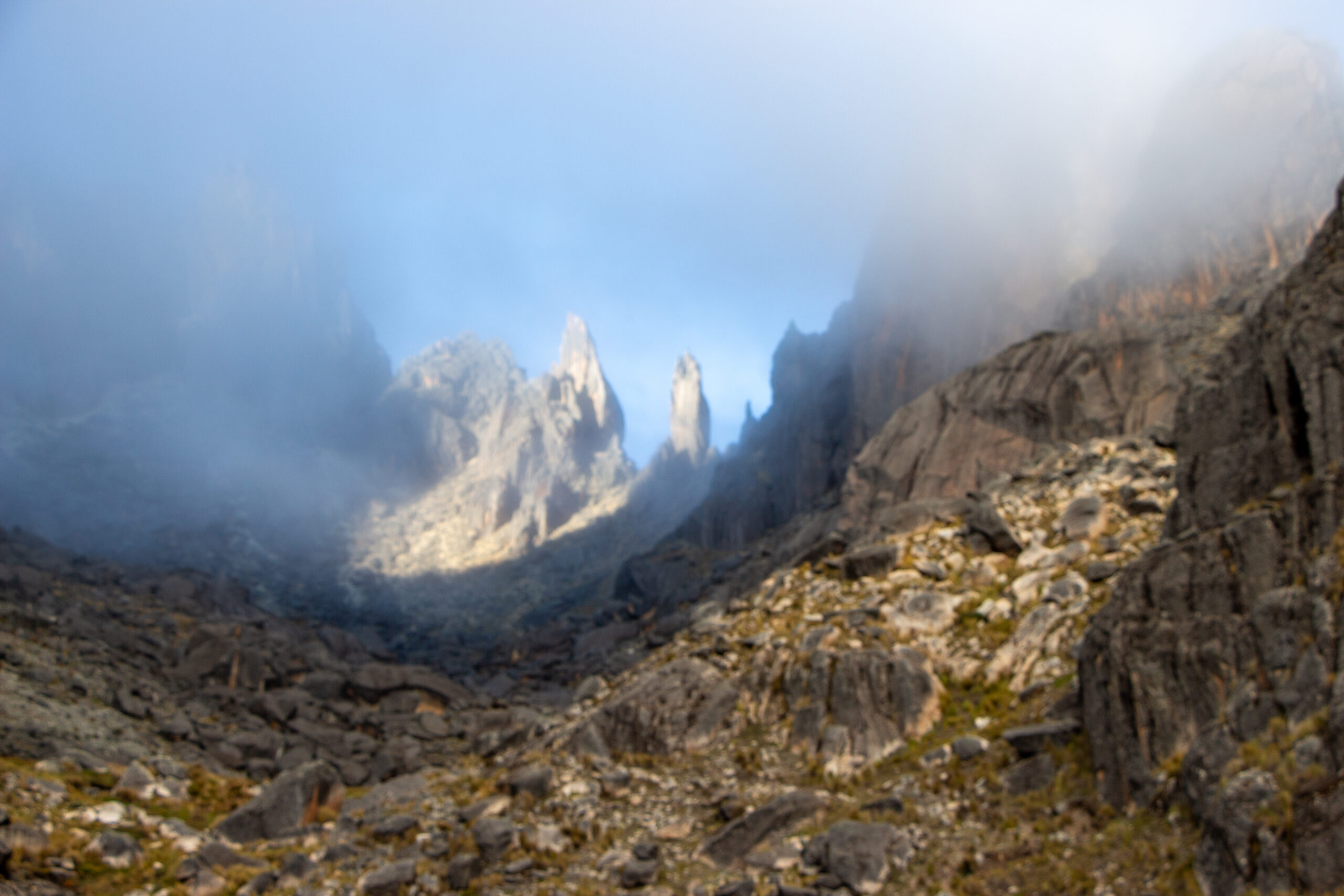
The Quimsa Cruz range of the Eastern Andes holds some of Bolivia’s most dramatic and least-traveled landscapes. Over four demanding days, you will climb from 4,000 meters to nearly 5,000 meters, following pre-Columbian trails carved by the ancient dwellers of these lands. You will walk through rugged peaks, past pristine lakes and cascading waterfalls, and then descend into hidden valleys where the air grows warm and the vegetation turns lush and green.
But the journey begins underground.
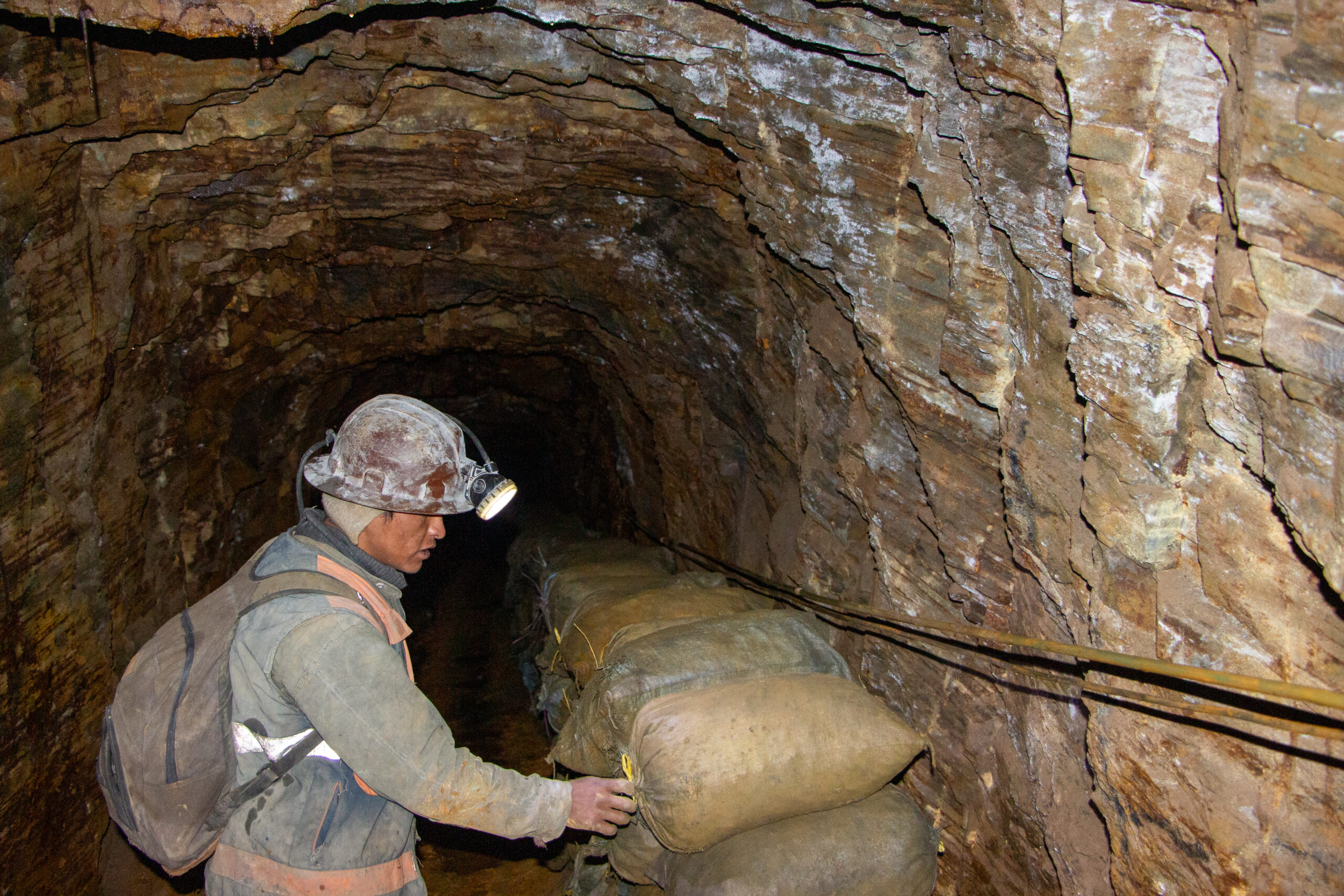
Before you set foot on the trail, you will enter an active tin mine, guided by the miners themselves. You will witness their daily reality, their ancient rituals, their profound faith in the spirits of the mountain. It is a rare, raw, and deeply human immersion—one that will stay with you long after you have left the darkness behind.
This is not just a trek. It is a passage through history, culture, and nature—an immersive experience that reveals the extraordinary contrasts of the Bolivian Andes.
The journey begins early, with a drive southeast from La Paz. The city falls away. The road climbs into the foothills, then higher still, until the first serious peaks of the Quimsa Cruz range appear on the horizon—jagged, snow-dusted, ancient.
By mid-morning, you arrive at the entrance to an active tin mine, managed by Bolivian miners who have spent their lives in these dark tunnels. Here, the modern spirit of Bolivia meets ancient traditions that have endured for centuries.
You are fitted with a helmet and headlamp. Your guide—an experienced miner—leads you into the mountain.
The air changes immediately: cooler, damper, heavier with the smell of earth and metal. The tunnels narrow. The light from the entrance fades. Your headlamp becomes your only sun.
You walk through passages where miners work daily, their faces streaked with dust, their hands calloused from generations of labor. Your guide explains the reality of their work: the long shifts, the dangers, the camaraderie. He shows you the rituals—the offerings of coca leaves and alcohol, the prayers to the protective spirits of the mountain, the “Uncle” and “Aunt” who guard the riches within.
This is not a performance for tourists. This is a genuine glimpse into a world of grit, faith, and tangible livelihood. You stand in the darkness, surrounded by rock and history, and you understand: this mountain gives, and the miners give back.
After the visit, you emerge into the sunlight, blinking, grateful for the warmth. The mine stays with you.
You continue by vehicle to the trailhead, where the trekking portion of your journey begins. The first day’s walk is moderate—a few hours of gentle ascent to your first campsite, surrounded by the rugged peaks of the Quimsa Cruz. The air is crisp, the temperature low, and the sky feels close enough to touch.
You fall asleep with images of tunnels and stars intertwined.
Morning comes cold and brilliant. Frost glitters on the tent. Your breath fogs the air. But the sun climbs quickly, and with it, the temperature.
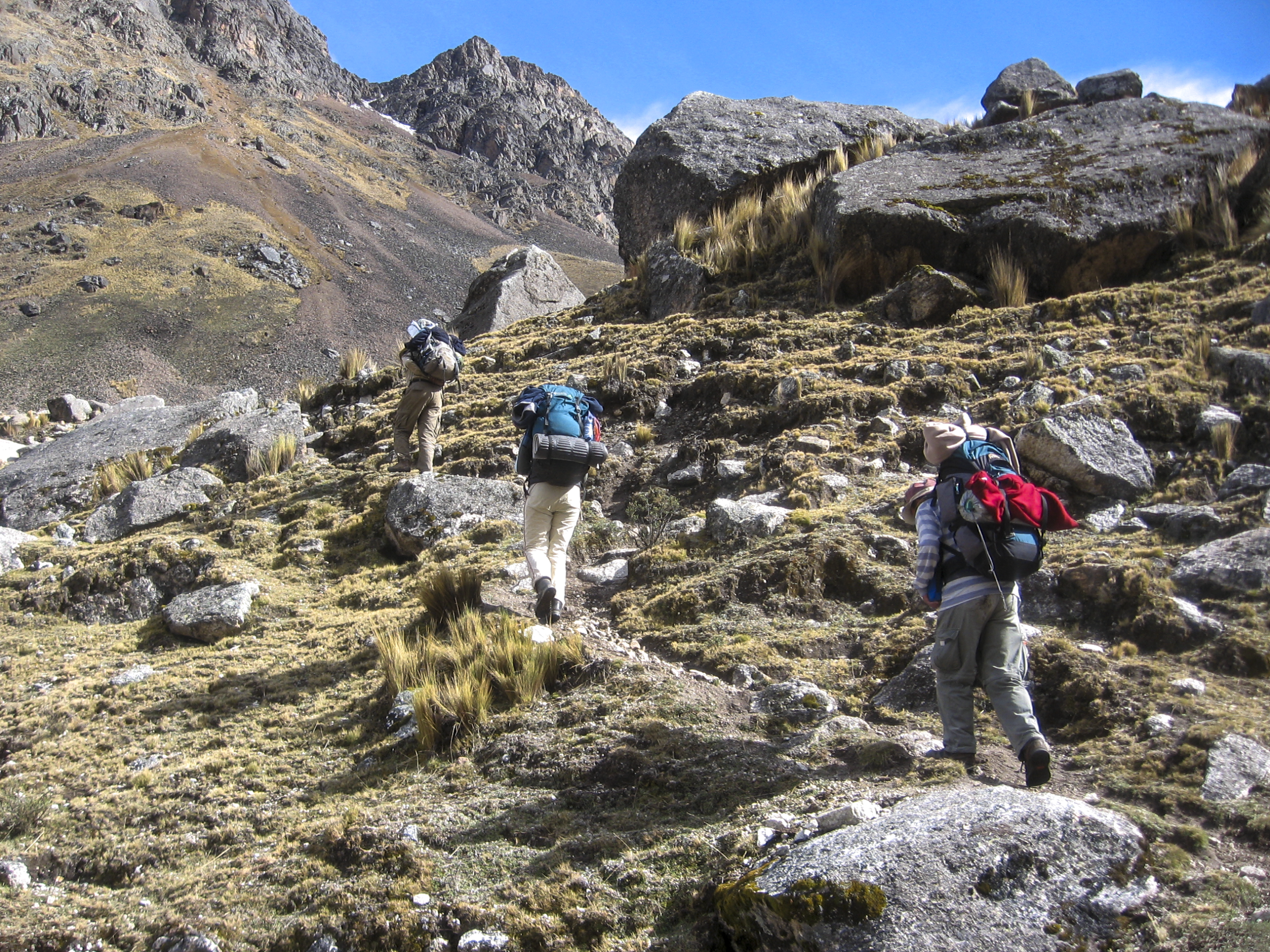
Today, you follow a pre-Columbian trail that winds upward through rugged terrain and towering peaks. This path was carved centuries ago—long before the Spanish arrived—by the ancient dwellers of these lands. It has carried pilgrims, traders, and warriors. Now, it carries you.
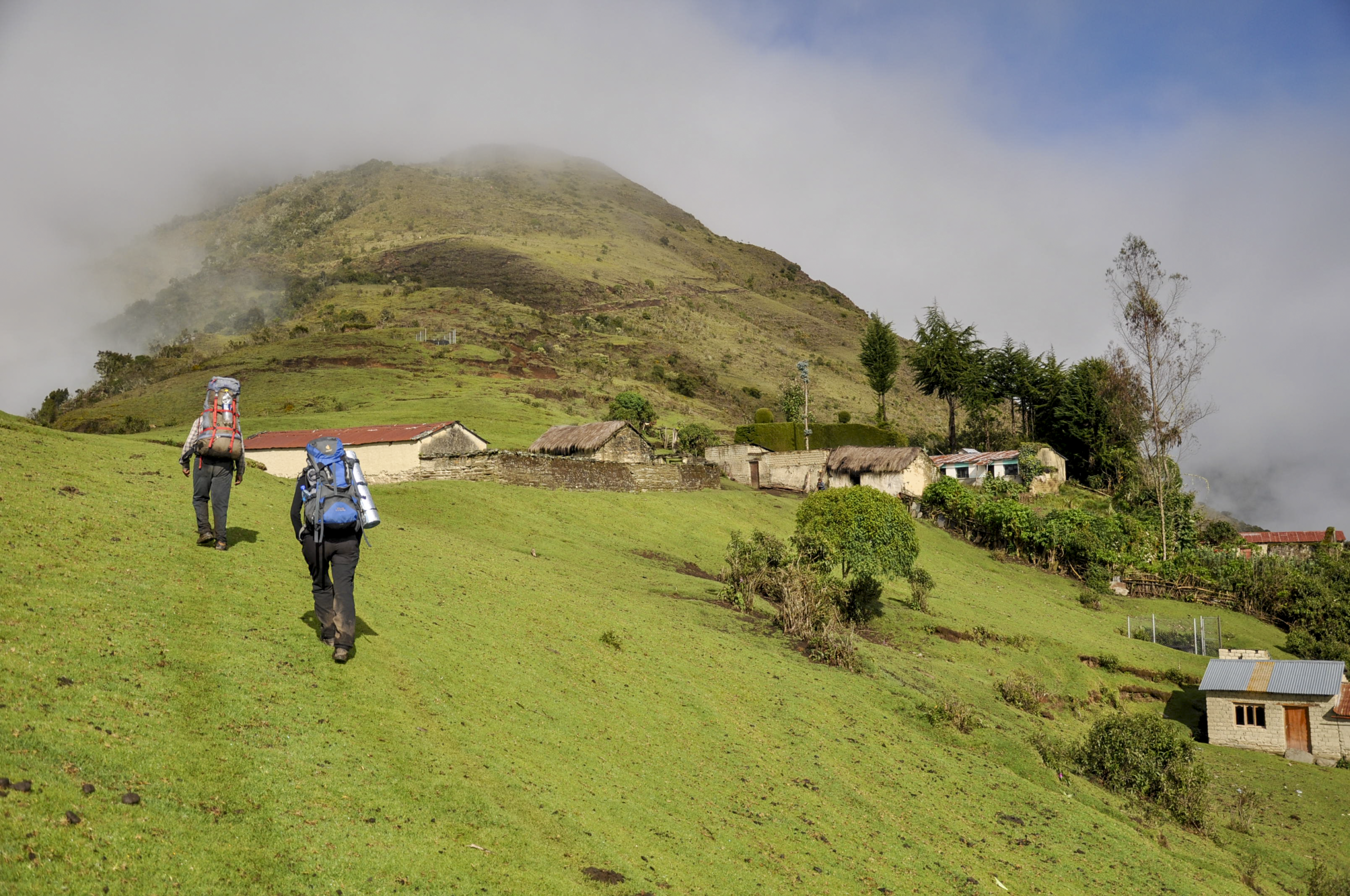
The ascent is steady. The air thins. The landscape becomes more dramatic with every step: rocky slopes, scattered grasses, and the first patches of snow clinging to shaded hollows. Small herds of llamas and alpacas graze on the sparse vegetation, lifting their heads to watch you pass.
The views are spectacular. Vast mountains stretch in every direction. Clouds drift just overhead, casting shifting shadows on the peaks. You feel small here—but in the best way.
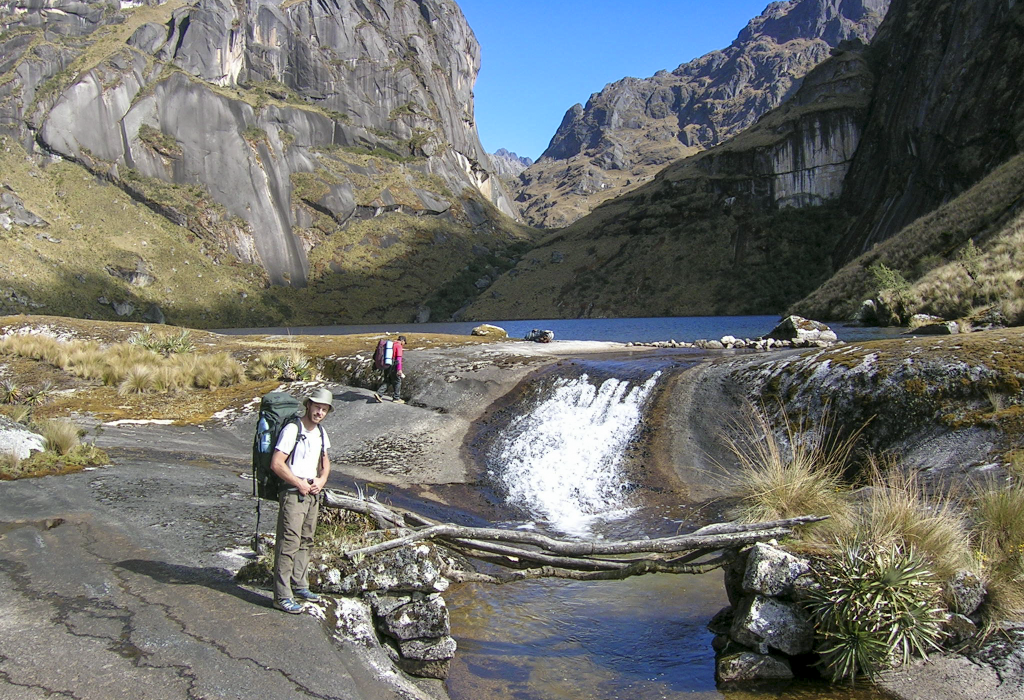
By late morning, you reach a high ridge. Below you, a pristine lake rests in a rocky basin, its waters impossibly blue, reflecting the sky and the surrounding peaks. You stop for lunch here, sitting on sun-warmed rocks, eating in silence because the landscape asks for silence.
The trail continues along the flanks of neighboring mountains, crossing additional passes, each one revealing new vistas. Light and shadow dance across the terrain. The only sounds are the wind, the crunch of boots on stone, and the distant cry of a bird.
By late afternoon, you approach the highest point of the circuit: Torrini Pass, near 5,000 meters (16,400 feet).
You climb the final slope slowly, deliberately. Each step requires effort. The air is half of what you are used to. But your guide sets a steady rhythm, and you follow.
And then, you are there.
The pass opens like a doorway. From here, the panorama unfolds in all directions: snowy summits, hanging valleys, and the long descent toward the green lowlands. The wind is strong and cold. The sky is an intense, deep blue.
You stand at the roof of the Quimsa Cruz. There is no hurry. You breathe slowly. You look. You remember.
Then, the descent begins.
The trail drops into an isolated valley, far from any populated center. Another pristine lake appears—then another. Small streams cascade down rocky slopes. The landscape softens. The air, still cool, carries a hint of something warmer to come.
You camp that night in a sheltered valley, surrounded by peaks that seem to guard you as you sleep.
You wake to a different world.
The air is warmer today. The frost is lighter, or absent. The sun feels stronger on your skin. The landscape has begun to transform.
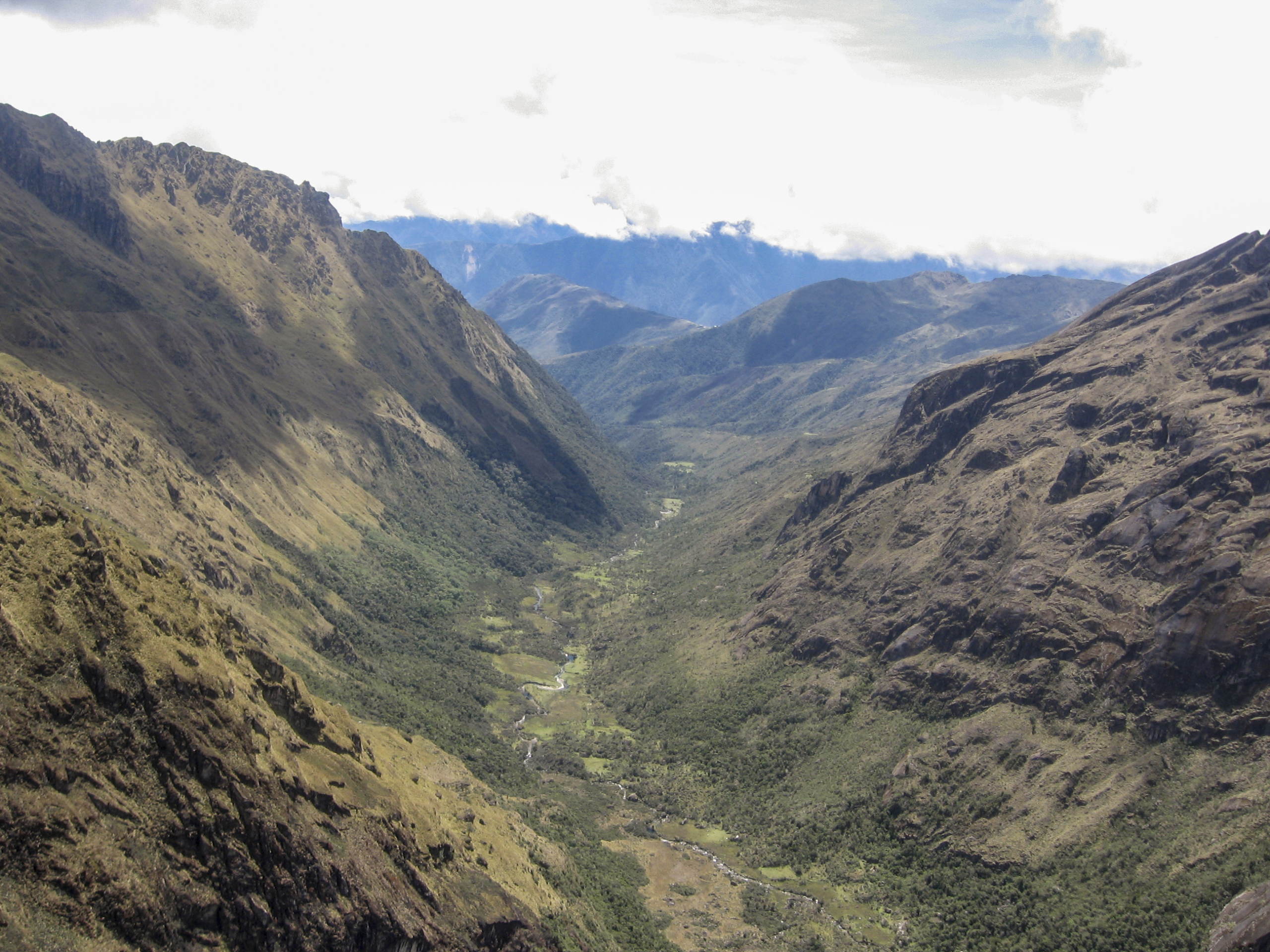
The trail continues its descent. The rocky, alpine terrain gives way to scattered shrubs, then grasses, then the first stunted trees. Small waterfalls appear—some distant silver threads on canyon walls, others close enough to feel the mist on your face.
You enter a section of the trail that clings to narrow paths, high above green valleys. The views are breathtaking—and slightly vertiginous. Below you, waterfalls plunge from high-altitude lakes into the valleys, their white threads cutting through green slopes. Your guide walks with confidence, and you follow, trusting your boots and your balance.
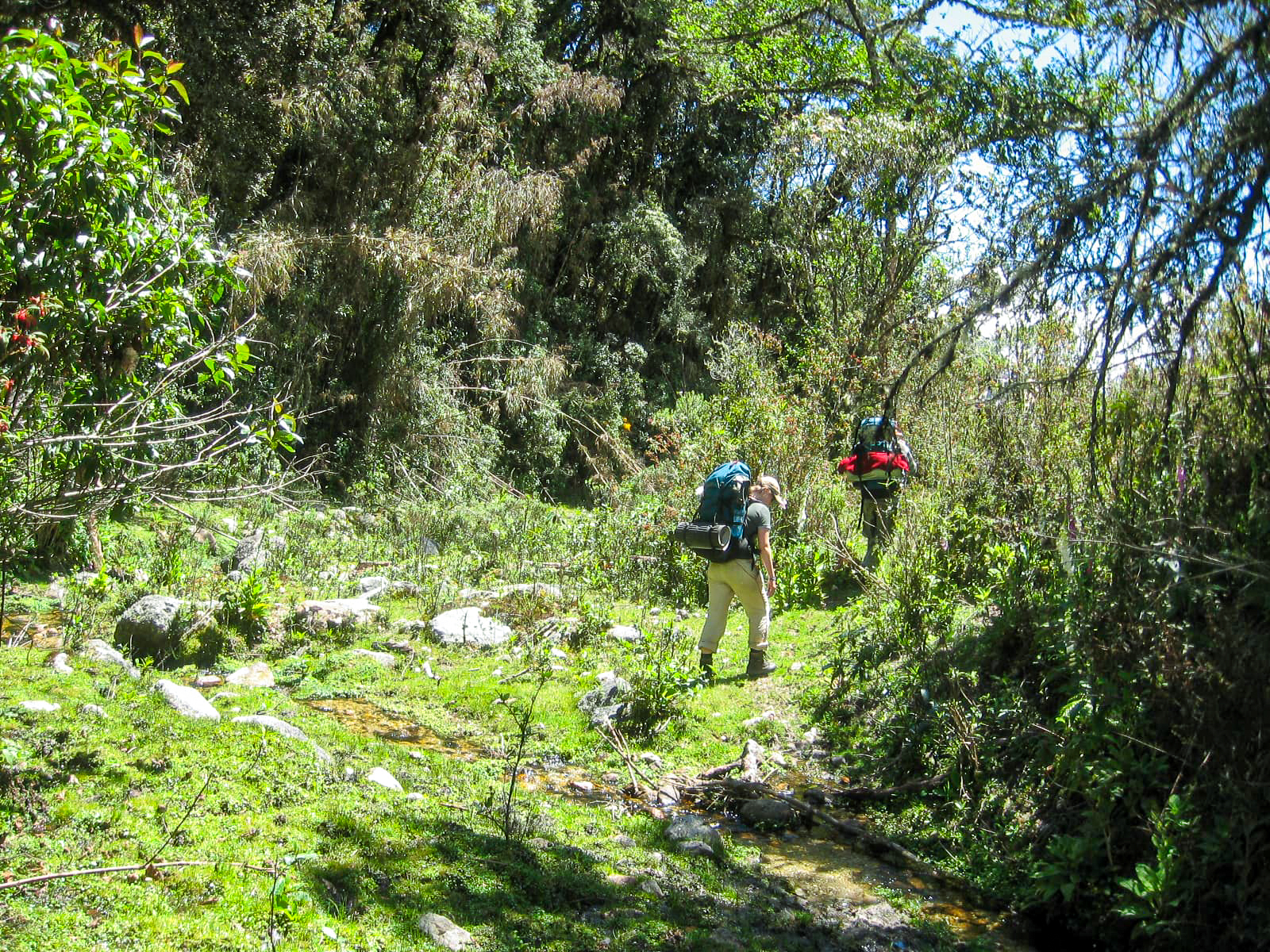
The ecosystem shifts with every kilometer. The air grows richer, heavier, fragrant with earth and growing things. The trail follows crystal clear rivers that tumble over ancient rocks. Small cascades create pools of emerald water. Birds you have not seen before flash through the trees—tanagers, hummingbirds, something with a long tail that disappears into the canopy.
This is the transition zone: no longer high Andes, not yet tropical jungle. A corridor of life between two worlds.
You walk through lush valleys where the vegetation is thick and green. The sound of rushing water accompanies you for most of the day. Small farms appear—terraced hillsides, stone fences, the first signs of human habitation since you left the mine.
By late afternoon, you arrive at a comfortable lodge or camping area near the final stage of the trek. The air is warm. The stars are still bright, but the nights are softer now.
Tomorrow, the reward.
The last day of trekking takes you down into a lush tropical valley. The path follows a river, passing beneath trees draped in vines. The mountains that have dominated the last four days now stand behind you—still visible.
By the end of the day you get your reward.
Natural hot springs nestled at the base of towering mountains. The pools are fed by geothermal springs, their waters warm, mineral-rich, and impossibly soothing on legs that have climbed to 5,000 meters and descended through every shade of green.
You sink in. Let the heat soak into your muscles. Watch the clouds drift over the valley. The trek is over, but the feeling—of having walked through history, culture, and raw nature—stays.
A campsite is set nearby and you spend the night with beautiful views of the valleys that lay far down and clear skies and the sound of distant flowing waters.
The last day begins with a breakfast, a last minute soak into the the hot springs and a tasty breakfast.
Then, the drive back to La Paz. The road climbs out of the warm valleys, passes through the high plains, and by late afternoon brings you home—tired, content, and full of images that will not fade:
The dark tunnels of the tin mine, and the miners’ rituals
The pre-Columbian trail, climbing toward the sky
Torrini Pass at 5,000 meters, where the world opens in all directions
The pristine lakes, impossibly blue, reflecting the peaks
The waterfalls, plunging from high lakes into green valleys
The narrow paths above the world
The hot springs, warm and healing, at journey’s end
Four days. One extraordinary passage through the Bolivian Andes.
 Why Trek the Quimsa Cruz – Torrini Pass Circuit with AHE?
This is not a trek for everyone. It is for those who want depth—not just scenery, but story. Not just a hike, but an immersion into the living, breathing culture of the Bolivian highlands.
When you book with Andes Heritage Expeditions, you are not just hiring a guide. You are stepping into a journey designed from your arrival to your farewell.
| Why AHE? | What You Get |
|---|---|
 Authentic mine visit Authentic mine visit | Guided by working miners – not a tourist performance |
 Pre-Columbian trails Pre-Columbian trails | Walk paths carved centuries before the Spanish arrived |
 Torrini Pass at 5,000 m Torrini Pass at 5,000 m | A high-altitude crossing with spectacular panoramic views |
 Pristine lakes & waterfalls Pristine lakes & waterfalls | Crystal waters, cascading falls, and hidden basins |
 Dramatic ecological descent Dramatic ecological descent | From frozen alpine to lush tropical valleys in 4 days |
 Hot springs finale Hot springs finale | Natural thermal pools to rest and reflect |
 Expert high-altitude guides Expert high-altitude guides | Trained for 5,000 m conditions, route-finding, and safety |
 Isolation & solitude Isolation & solitude | Far from populated areas – just you, the mountains, and the silence |
We design tailor-made trekking experiences for every level of trekker – from high mountain plateaus to tropical valleys and cultural immersion. We take care of every detail, from arrival to departure.
Walk with us. The Quimsa Cruz is waiting.
 Quick Facts
| Detail | Information |
|---|---|
| Duration | 4 days / 3 nights |
| Starting point | La Paz City (early morning pickup) |
| Difficulty | Medium–High (altitude, exposure, rocky terrain) |
| Maximum altitude | ~5,000 m (16,400 ft) – Torrini Pass |
| Minimum altitude | Tropical valleys (approx. 1,500–2,000 m depending on route) |
| Total trekking distance | Approximately 30–40 km over 4 days |
| Best season | April–October (dry season) |
| Accommodation | Camping (basic mountain camps) + final night near hot springs |
| Who it’s for | Experienced trekkers or well-acclimatized hikers comfortable with altitude and exposure |
 Important Notes for Travelers
This trek reaches 5,000 meters on Day 2. The air at this altitude contains roughly half the oxygen you are used to at sea level.
You must:
Acclimatize in La Paz (3,650 m) for at least 2–3 days before starting
Hydrate aggressively (3–4 liters of water daily)
Avoid alcohol and heavy foods before and during the trek
Listen to your body and your guide
Sections of the trail are narrow, with exposure high above green valleys
The route is not always clearly marked – an experienced guide is essential
Rocky terrain, some steep sections, and possible snow near the pass (dry season only)
 Sturdy, broken-in trekking boots (ankle support essential)
Layered clothing: thermal base, fleece, insulated jacket, waterproof/windproof outer
Warm hat, gloves, buff/neck gaiter (mornings and evenings are cold)
Sunscreen (SPF 50+), lip balm, sunglasses with UV protection
Headlamp with extra batteries (for the mine and for camp)
Water bottles or hydration bladder (3 L capacity recommended)
Swimwear for the hot springs
Experienced high-altitude trekkers
Well-acclimatized hikers with good fitness
Travelers seeking cultural depth (mine visit) combined with natural beauty
Those who want solitude and dramatic ecological contrast
 Not recommended for first-time trekkers without altitude experience
 Not suitable for travelers with vertigo (narrow sections with exposure)
 Combine This Circuit with Other AHE Adventures
This 4-day trek pairs beautifully with:
AsiruMarca Valley – add 2 days of granite stone cities (compatible ecological transition)
Titikaka Lake & Moko-Moko – add 6 days of sacred islands and subtropical descent
Uyuni Salt Flats – travel from La Paz on a 4×4 for a completely different landscape
Let us know if you would like to build a custom multi-adventure package.